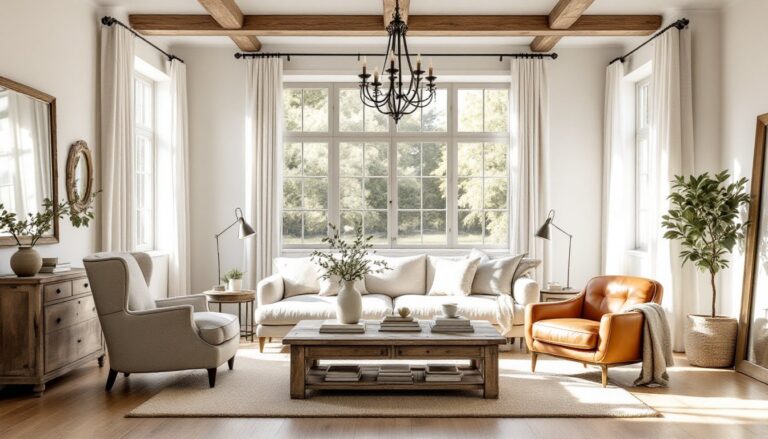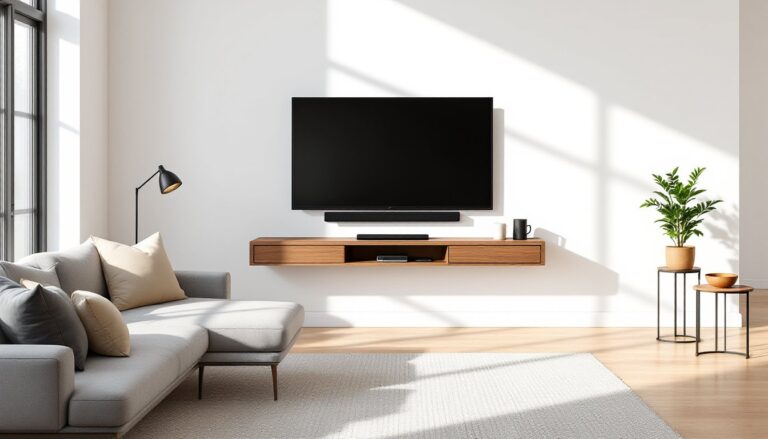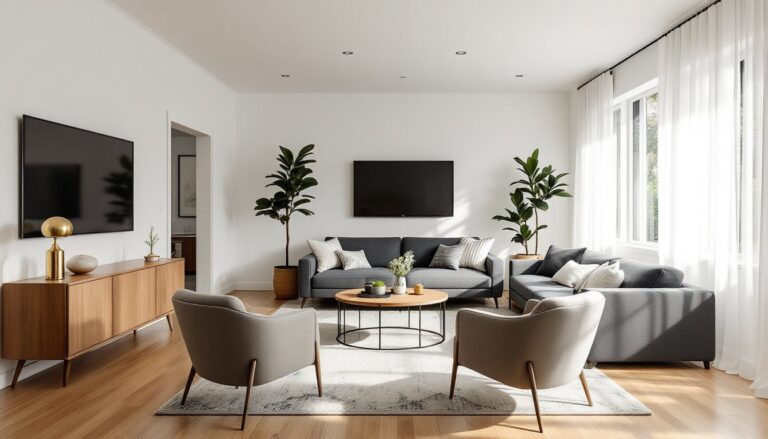

Most homeowners default to pushing furniture against walls, but that’s not always the best move, especially in living rooms with odd angles, bay windows, or asymmetrical footprints. Angled layouts break the grid and actually improve traffic flow, create intimate conversation zones, and make awkward corners feel intentional instead of leftover. This isn’t about tossing a couch at 45 degrees and calling it done. It requires thoughtful measurement, understanding sight lines, and knowing when to anchor a piece diagonally versus float it in space. The payoff? A room that feels custom-designed rather than squeezed into a box.
Table of Contents
ToggleKey Takeaways
- Angled living room layouts improve traffic flow, create intimate conversation zones, and make awkward corners feel intentional rather than like wasted space.
- Place furniture at 30–45 degrees and maintain at least 30 inches of clearance behind angled pieces to ensure comfortable passage and prevent cramped pathways.
- Always mock up your angled living room layout with painter’s tape before moving heavy furniture to verify measurements, sight lines, and traffic flow patterns.
- Use area rugs and lighting to anchor angled arrangements, but balance angles with at least one parallel element (like a media console) to prevent the room from feeling chaotic or disorienting.
- Angled furniture arrangements work best in rooms over 150 square feet and require careful scale consideration—oversized sectionals will dominate small spaces and block pathways.
- Avoid common mistakes like angling every piece, using round coffee tables, or skipping the mock-up phase, which typically leads to unsatisfactory layouts that waste time and effort.
Why Angled Furniture Placement Creates Better Flow
Placing furniture on an angle does more than look interesting, it redirects foot traffic and opens up usable square footage. When a sofa runs parallel to a wall, it forces people to walk around the perimeter of the room. Angle it 30–45 degrees, and suddenly there’s a natural pathway behind it, plus a defined zone in front.
This works especially well in open-concept spaces where the living room bleeds into a dining area or kitchen. An angled sectional can act as a visual divider without blocking sightlines or requiring a half-wall. It softens the boxy feel of most floor plans and makes rectangular rooms feel less like a bowling alley.
Angled placement also solves the corner TV dilemma. Mounting a television in a corner and angling seating toward it eliminates glare from windows and creates a more centralized focal point. Instead of everyone craning their necks, seating wraps naturally around the viewing area.
One caveat: angled layouts eat up more floor space than parallel arrangements. A sofa placed diagonally across a corner can claim an extra 12–18 inches of radius compared to a wall-hugging setup. That’s fine in a spacious room, but in tight quarters (under 150 square feet), the trade-off may not be worth it. Measure twice, mock it up with painter’s tape on the floor, and walk the paths before committing.
Best Furniture Arrangements for Angled Living Rooms
There’s no one-size-fits-all template, but certain configurations handle angles better than others. Here are two proven layouts that work in most asymmetrical or corner-challenged spaces.
Diagonal Sofa Placement
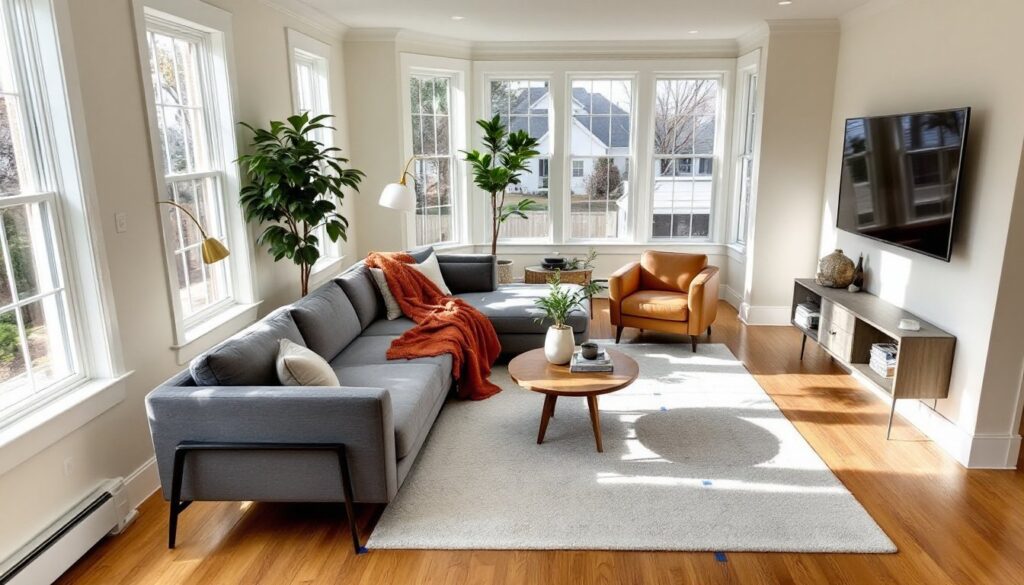
This is the go-to move for rooms with a corner fireplace, angled walls, or bay windows. Position the sofa at a 45-degree angle from the corner, with the back floating in space rather than touching any wall. This creates a triangular dead zone behind the sofa, perfect for a narrow console table, a floor lamp, or even a small workspace if the room pulls double duty.
Key measurements: Leave at least 30 inches between the back of the sofa and the wall for comfortable passage. If the gap is tighter than 24 inches, it feels like a trap, not a pathway. Use a tape measure and mark the footprint on the floor with painter’s tape before moving heavy furniture.
Pair the angled sofa with a rectangular or oval coffee table positioned parallel to the sofa’s front edge, not the room’s walls. This maintains the diagonal rhythm and keeps the arrangement cohesive. Avoid round coffee tables here, they tend to look adrift when everything else is on an angle.
Anchor the setup with an area rug that’s large enough to fit all front legs of the seating. The rug should follow the angle of the sofa, not the walls. An 8×10 or 9×12 rug works for most standard living rooms: smaller rugs make furniture look like it’s floating on a raft.
Corner Conversation Zones
If the room has two awkward corners or an L-shaped footprint, consider creating dual zones instead of one central seating area. Place a loveseat or pair of armchairs in one corner at an angle, with a small side table and lamp. In the opposite corner, add a reading chair, bookshelf, or even a piano if space allows.
This layout works well in long, narrow living rooms (10×18 feet or similar) where a single sofa would dominate and make the space feel like a hallway. By breaking the room into smaller, angled clusters, each zone feels purposeful.
Pro tip: Make sure each zone has its own task lighting. Angled furniture often sits farther from overhead fixtures, so relying solely on ceiling lights leaves corners dim. A floor lamp or swing-arm sconce behind an angled chair solves this without requiring new electrical work.
Design Tips to Make Angled Layouts Work
Angling furniture is only half the equation. Without the right visual anchors and proportions, the room can feel chaotic or worse, like someone gave up halfway through arranging.
Use rugs to define the angle. As mentioned earlier, the rug should mirror the furniture’s orientation. A rug aligned with the walls while the sofa sits diagonal creates visual tension. Let the rug commit to the angle, and the room will read as intentional.
Balance with at least one parallel element. If everything in the room is on a slant, it feels disorienting. Keep the media console, bookshelf, or a pair of end tables parallel to the walls. This gives the eye a resting point and prevents the space from feeling like a funhouse.
Mind the sight lines from doorways. Stand in the main entrance to the room and note what you see first. An angled sofa back can look awkward if it’s the first thing visible. If that’s unavoidable, dress it up with a sofa table and decor, or choose a sofa with a finished back panel.
Watch your outlet access. Angled furniture often lands farther from wall outlets. If a sofa ends up four feet from the nearest plug, powering lamps or charging devices becomes a hassle. Use flat extension cords (rated for continuous use) tucked under the rug if running new outlets isn’t in the budget. Never daisy-chain power strips, this violates NEC 400.8 and poses a fire risk.
Consider modular or armless seating. Sectionals with a chaise or armless chairs are easier to configure at angles than traditional three-cushion sofas with bulky rolled arms. They create cleaner lines and adapt better to non-standard layouts.
Scale matters more than ever. An oversized sectional angled in a small room will dominate and block pathways. Measure the longest dimension of your seating (including any angled projection into the room) and make sure it doesn’t exceed two-thirds the length of the room’s longest wall.
Common Mistakes to Avoid With Angled Arrangements
Even experienced DIYers stumble when shifting away from the standard parallel grid. Here’s what usually goes wrong, and how to dodge it.
Angling everything. As noted, too many slanted pieces creates visual chaos. Limit angles to one or two major furniture items (sofa, chairs), and keep supporting pieces like consoles, shelving, and tables square to the walls.
Ignoring traffic flow behind angled pieces. If someone has to shimmy sideways to get past the back of a sofa, the angle is too aggressive or the room is too small for that layout. Maintain that 30-inch minimum clearance for walkways. In high-traffic areas (between the living room and kitchen, for example), aim for 36 inches.
Forgetting to secure rugs. Angled rugs on hardwood or tile are slip hazards, especially with furniture weight distributed unevenly. Use a quality rug pad (not the cheap mesh kind) that grips both the floor and the rug backing. Trim it slightly smaller than the rug perimeter so it doesn’t peek out.
Choosing the wrong coffee table shape. Round tables look lost in angled setups. Stick with rectangular, oval, or even asymmetrical shapes that echo the geometry of the layout.
Skipping the mock-up. This is the biggest mistake. Dragging a heavy sectional into place and realizing it doesn’t work is exhausting and often leads to settling for a mediocre layout. Spend 15 minutes with painter’s tape marking footprints on the floor. Walk the room. Sit where you’d sit. Adjust before moving a single piece of furniture.
Overcommitting in rentals or temporary spaces. If a space isn’t permanent, avoid layouts that require wall-mounted shelving, new electrical, or custom-cut rugs. Keep angled arrangements flexible with freestanding furniture that can adapt to the next home.
Conclusion
Angled furniture layouts turn problem areas into design features, but they demand more precision than the standard shove-it-against-the-wall approach. Measure clearances, mock up placements with tape, and balance angled pieces with at least a few parallel elements. Done right, an angled living room layout doesn’t just look intentional, it actually works better.