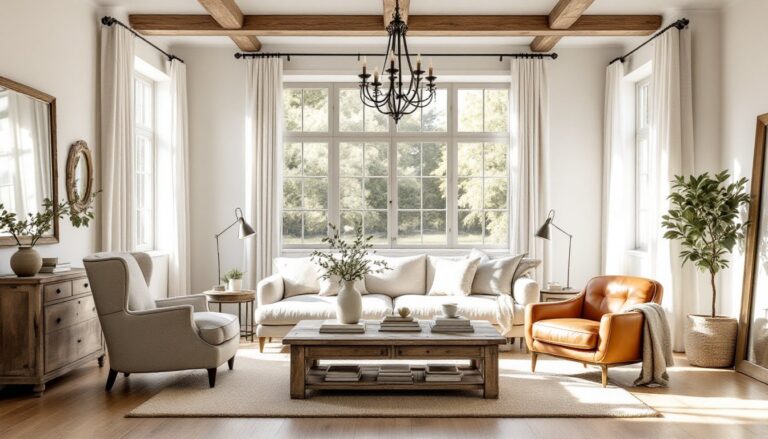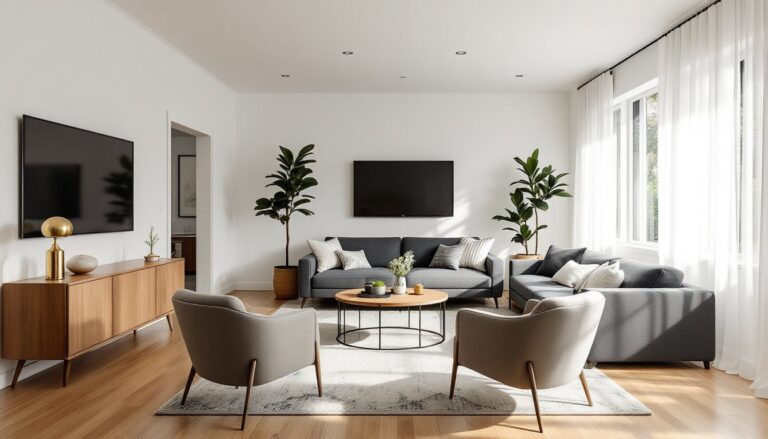

Window treatments anchor a living room’s aesthetic while solving practical problems, light control, privacy, and energy efficiency. The right combination of blinds and curtains can transform a space from builder-grade to custom without a full renovation. In 2026, homeowners are moving beyond single-layer solutions, mixing materials and styles to create depth and function. This guide covers actionable ideas for layering, color selection, material choices, and budget-conscious strategies that deliver professional results. Whether working with floor-to-ceiling windows or standard double-hungs, these approaches work across architectural styles and skill levels.
Table of Contents
ToggleKey Takeaways
- Layering blinds and curtains with cellular shades as the inner layer and drapery panels on ceiling-mounted tracks creates both functional light control and visual depth in your living room.
- Mount curtain rods 4 to 6 inches above the window frame and extend brackets 8 to 12 inches beyond each side to visually enlarge windows and allow proper curtain stacking when open.
- Strategic color choices—pairing neutral walls with jewel-toned curtains or testing fabric samples in natural light for 24 hours—prevent costly mistakes and enhance your room’s focal points.
- Top-down/bottom-up cellular shades and motorized blinds solve privacy and light control challenges while improving energy efficiency by R-2 to R-5 rating improvements.
- Budget-friendly window treatments achieve high-end results by upgrading hardware finishes, using ready-made panels hemmed to length, and building simple pelmet boxes to hide rod systems.
- Mixing textures deliberately—smooth aluminum blinds with linen curtains or roller shades with heavyweight velvet—adds dimension without visual clutter in minimalist spaces.
Layering Blinds and Curtains for Maximum Style and Function
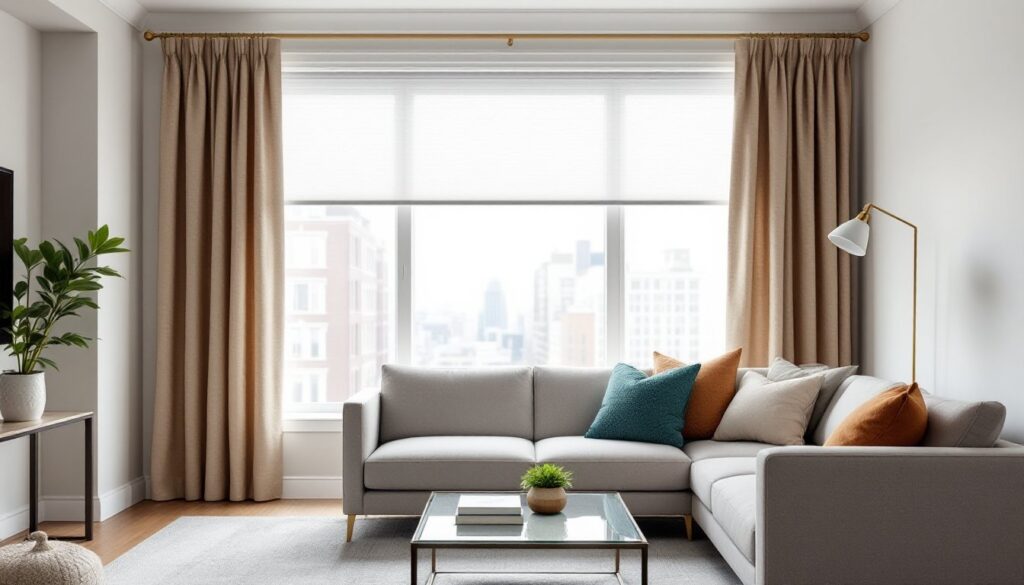
Layering combines the precision of blinds with the softness of curtains, giving homeowners control over light, insulation, and aesthetics. The most effective approach uses cellular shades or roller blinds as the functional inner layer, paired with drapery panels for visual weight.
Mount cellular shades inside the window frame for a clean look and maximum glass coverage. Choose cordless or motorized options to avoid tangled lift cords behind curtain panels. For light control, blackout roller blinds work well in media rooms or sun-drenched spaces, while sheer roller shades soften harsh light without blocking views.
Install curtain rods 4 to 6 inches above the window frame and extend brackets 8 to 12 inches beyond each side of the window. This creates the illusion of larger windows and allows curtains to stack off the glass when open. Use 1.5-inch diameter rods for lightweight fabrics and 2-inch rods for heavy drapes or wide spans over 6 feet.
Dual-layer hardware simplifies the setup: systems like double curtain rods or track-and-rod combinations let users operate blinds and curtains independently. For a streamlined look, mount blinds on the window frame and hang curtains from ceiling-mounted tracks that sit 2 to 4 inches in front of the blinds.
Mix textures deliberately. Pair smooth aluminum blinds with linen or cotton-blend curtains for contrast. In modern spaces, combine sleek roller shades with heavyweight velvet or wool drapes. The contrast between structured and soft elements adds dimension without clutter.
Modern Minimalist Window Treatments That Make a Statement
Minimalist doesn’t mean boring. Motorized roller shades in solid colors eliminate visual clutter while offering one-touch control. Choose 3% to 5% openness factor fabrics for daytime privacy with filtered light, or blackout weaves for complete light blocking.
Ripplefold drapery creates uniform, tailored pleats that stack compactly when open. Unlike traditional pinch-pleat or goblet styles, ripplefold requires specific carriers and track systems, budget around $40 to $60 per linear foot installed, though DIY track kits bring costs down to $15 to $25 per foot plus fabric.
For hardware-minimalist setups, recessed pocket tracks hide mounting systems entirely. These require a header depth of at least 4 inches and work best in new construction or major remodels. Retrofit options include slim ceiling-mounted tracks in white or brushed metal finishes that blend into trim.
Roman shades in solid neutrals offer tailored minimalism with mounting flexibility. Flat-fold Romans create crisp horizontal lines: choose outside-mount installation to cover the entire window frame and add architectural presence. Pair them with sheer curtain panels on simple rod hardware for optional softness.
Stick to monochromatic palettes, whites, grays, warm taupes, and let texture create interest. A boucle or nubby linen in off-white has more depth than smooth polyester, even in the same color. Avoid fussy trims, tassels, or multi-layered valances: clean hems and precise seams are the details that matter.
Color and Pattern Ideas to Complement Your Living Room
Curtains and blinds don’t have to match wall color, contrast creates focal points. In rooms with neutral walls, jewel-toned drapes (emerald, sapphire, deep rust) anchor seating areas and add warmth. For bold wall colors, choose window treatments two to three shades lighter or darker than the dominant hue to avoid a flat, monochrome look.
Patterned curtains work best when one color in the print repeats an existing room accent, a pillow, rug, or artwork. Geometric prints suit modern and transitional spaces: 1-inch to 3-inch stripes elongate walls visually. Larger-scale florals or abstract motifs fit traditional or eclectic rooms but require higher ceilings (9 feet or more) to avoid overwhelming the space.
Keep blinds neutral when using patterned curtains. White, cream, or soft gray blinds provide a consistent backdrop and won’t compete with fabric patterns. Conversely, patterned blinds (woven woods with natural variation, printed roller shades) pair well with solid drapes in complementary tones.
Ombré and color-block curtains bridge traditional and contemporary styles. These work in rooms with simple furniture lines and minimal pattern elsewhere. Install them with the darker portion at the bottom to ground the room visually.
Test fabric samples in the actual room at different times of day. Natural and artificial light shift colors significantly, what looks like soft gray in the store may read as lavender or blue-gray at home. Pin samples next to existing furniture and flooring for at least 24 hours before committing.
Smart Solutions for Light Control and Privacy
Top-down/bottom-up cellular shades solve the privacy-and-light dilemma in ground-floor or street-facing living rooms. Lower the shade from the top to let in natural light while blocking sightlines from outside, or raise from the bottom for traditional operation. These require dual-cord or cordless lift systems: cordless adds $30 to $60 per window but eliminates dangling cords.
Sheer curtains over blackout blinds offer flexible privacy. During the day, open blackout blinds and close sheers for diffused light and obscured views. At night, close blinds for full privacy and insulation. This combination also reduces energy loss, cellular shades can improve window insulation by R-2 to R-5, and heavy drapes add another layer of thermal resistance.
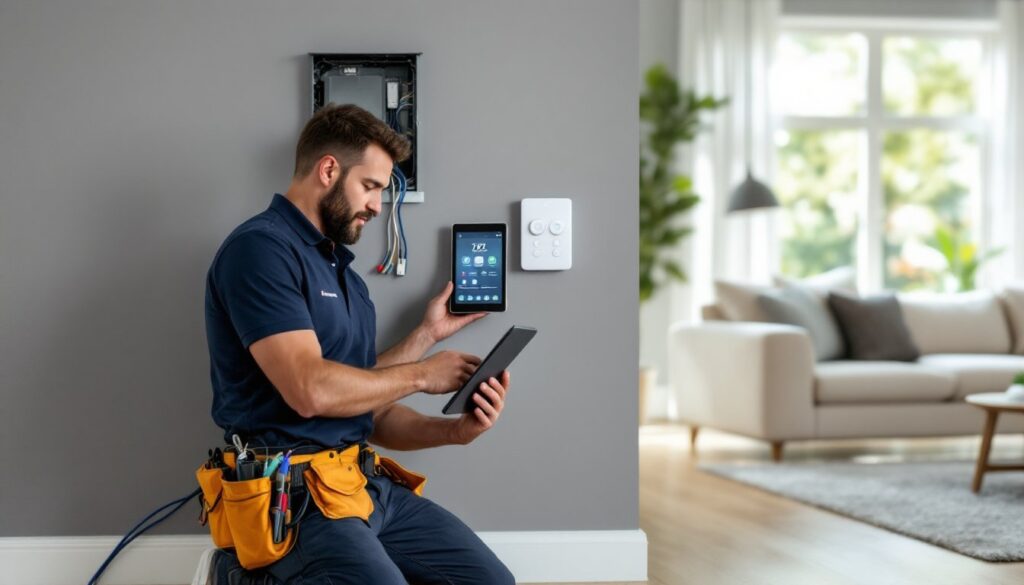
For smart home integration, motorized blinds and curtains connect to Wi-Fi hubs, voice assistants, or programmable schedules. Mid-range motorized roller shades start around $250 to $400 per window, with battery-powered options available for retrofit installations (no electrician required). Motorization works especially well for hard-to-reach windows or for automating light control based on time of day.
Solar shades (3% to 10% openness) reduce glare on screens without eliminating daylight, ideal for living rooms doubling as home offices. Pair them with linen or cotton drapes on a separate rod for evening privacy.
Vertical blinds or sliding panels suit patio doors and wide window spans. Modern versions use fabric-wrapped vanes instead of plastic slats for a softer appearance. Measure track length carefully, panels should overlap by 2 to 3 inches when closed to prevent light gaps.
Choosing the Right Fabric and Material Combinations
Natural fibers, linen, cotton, wool, offer texture and durability but may require lining to prevent fading and improve drape. Linen curtains soften over time and develop a relaxed texture: pair them with blackout lining if light control matters. Expect 100% linen to cost $25 to $60 per yard for decorator weight (7 to 10 oz per square yard).
Polyester and poly-blend fabrics resist fading and wrinkles, making them practical for sunny rooms or households with kids and pets. High-quality polyester can mimic linen or silk at half the price. Look for faux linen blends (polyester with a slub weave) that combine the look of natural fiber with easy-care benefits.
Velvet and heavyweight fabrics provide excellent sound dampening and insulation. Use them in rooms with high ceilings or large windows where their visual weight won’t overwhelm. Velvet drapes typically require 2 to 2.5 times fullness, for a 6-foot-wide window, order panels totaling 12 to 15 feet of fabric width for proper gathering.
Woven wood blinds (bamboo, grasses, reeds) add organic texture and pair well with solid curtains in earth tones or muted colors. These filter light but don’t block it completely: add a privacy liner if needed. Note that natural materials expand and contract with humidity, leave 1/4-inch clearance on inside-mount installations.
Faux wood and composite blinds resist moisture and warping, making them suitable for rooms with fluctuating temperatures or humidity. Pair them with cotton or cotton-linen drapes for a balanced look. Choose 2-inch slats for standard windows and 2.5-inch or wider slats for large windows or high ceilings to maintain proportion.
Budget-Friendly Window Treatment Ideas That Look Expensive
Ready-made curtain panels in standard lengths (84, 95, 108 inches) cost $20 to $60 per panel and work for most window sizes. Hem them to custom lengths with fabric glue or basic sewing, no hardware beyond a needle and thread required. Buy extra-long panels and puddle them 1 to 2 inches on the floor for a high-end look.
DIY flat-fold Roman shades use tension-mounted roller shade kits (around $15 to $30) as the base, with fabric panels attached using hook-and-loop tape. Choose medium-weight cotton or canvas for structure. Stitch horizontal folds at 8 to 10-inch intervals for a tailored appearance.
IKEA and big-box retailers offer affordable roller shades and panel curtains. Upgrade their appearance by swapping basic hardware for brushed brass or matte black rods ($25 to $50 for quality options). The rod finish makes a bigger visual impact than most homeowners expect.
Painters drop cloths (canvas, not plastic) make surprisingly good curtains. A 9 x 12-foot canvas drop cloth costs $15 to $25 and provides enough fabric for two panels. Hem the edges, add grommets or clip rings, and hang. The natural texture reads as intentional, not cheap.
Tension rods ($10 to $20) work for lightweight curtains in rental situations or temporary setups. For heavier panels, use inside-mount café rods or install proper wall-mounted brackets into studs.
Skip expensive custom valances and cornices, use a simple upholstered pelmet box instead. Build a basic frame from 1×4 lumber, wrap it in batting and fabric, and mount it above the window with L-brackets. Total material cost runs $30 to $50, and it hides curtain rod hardware while adding architectural detail.
Conclusion
Window treatments shape how a living room functions and feels. Layering provides flexibility, modern minimalism delivers clean lines, and strategic color choices tie the room together. Smart light control and the right fabric combinations solve practical challenges while staying within budget. Start with accurate measurements, invest in proper mounting hardware, and don’t skip prep work, window treatments look custom when they’re installed with precision. The payoff is a room that balances style, comfort, and control.