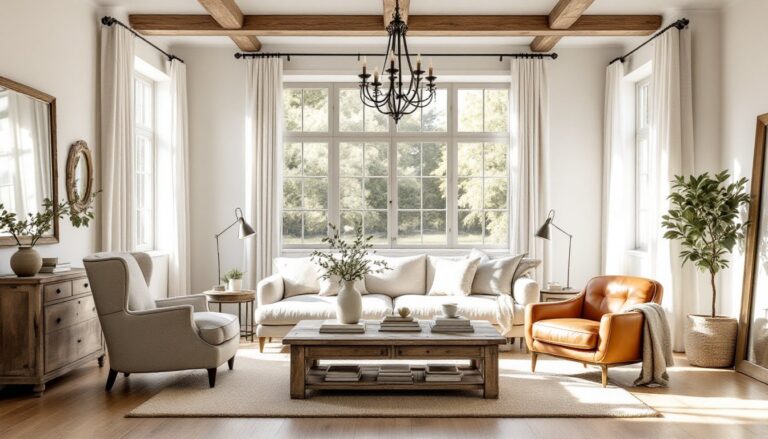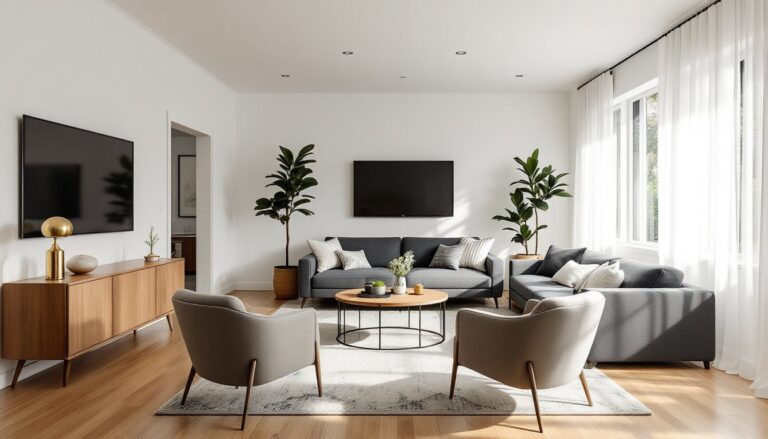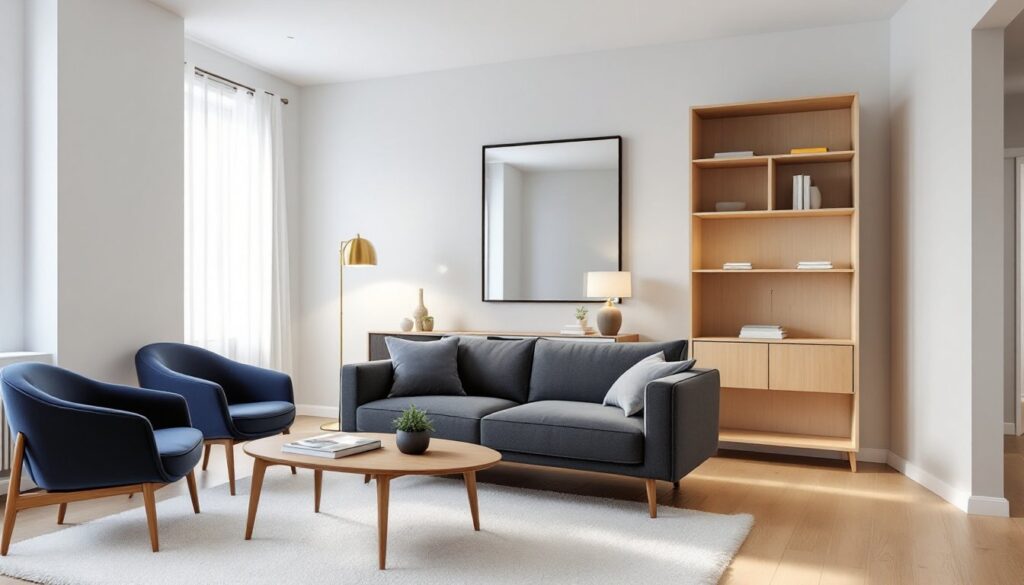

A well-placed oversized mirror can completely reshape how a living room feels, opening up cramped quarters, bouncing light into dim corners, and adding architectural weight without the cost of renovation. Unlike smaller decorative mirrors that whisper, a big mirror commands attention. It can anchor a sparse wall, balance heavy furniture, or trick the eye into seeing double the square footage. But scale alone doesn’t guarantee success. The wrong frame style, awkward placement, or poor integration with existing decor can make even an expensive piece look like an afterthought. This guide walks through proven placement strategies, frame options, and styling techniques that turn a large mirror into a living room centerpiece.
Table of Contents
ToggleKey Takeaways
- Big mirrors in living rooms amplify natural light, create depth illusions, and solve design challenges without permanent renovation or costly alterations.
- Strategic placement above a sofa (two-thirds to three-quarters the sofa width) creates an instant focal point, while floor-to-ceiling mirrors work best in corners to maximize light reflection and spatial expansion.
- Frame style determines aesthetic impact—thin metal frames suit modern interiors, chunky wood frames add warmth for farmhouse styles, and frameless options create gallery-like effects in contemporary spaces.
- Angle mirrors 15 to 30 degrees from windows to reduce glare, position them to reflect attractive decor elements rather than blank walls, and pair with wall sconces for enhanced lighting and visual balance.
- Ground a big mirror with a console table or credenza, flank it with matching sconces at eye level, and add greenery nearby to create a cohesive, intentional vignette rather than a stark, disconnected feature.
Why Oversized Mirrors Are Essential for Modern Living Rooms
Large mirrors solve multiple design challenges simultaneously, which explains their popularity in contemporary interiors. First, they amplify available light. A 72-inch mirror positioned opposite or adjacent to a window can effectively double the natural light in a room, reducing reliance on artificial lighting during daylight hours. This matters especially in north-facing rooms or spaces with limited window area.
Second, they create the illusion of depth. In narrow living rooms or apartments with low ceilings, a strategically placed mirror visually extends the wall plane, making the room feel larger than its actual dimensions. This isn’t decorative sleight of hand, it’s a legitimate architectural trick used by designers to correct proportion issues.
Third, oversized mirrors serve as low-commitment focal points. Compared to built-in shelving, wainscoting, or a fireplace surround, a large mirror delivers visual weight and presence without permanent alteration. Renters and homeowners planning future remodels benefit from this flexibility.
Finally, mirrors balance rooms with asymmetrical layouts or mismatched furniture. A 6-foot or larger mirror can anchor an otherwise awkward wall, giving the eye a clear resting point and organizing the visual hierarchy of the space.
Strategic Placement Ideas for Maximum Impact
Above the Sofa: Creating a Gallery-Worthy Focal Point
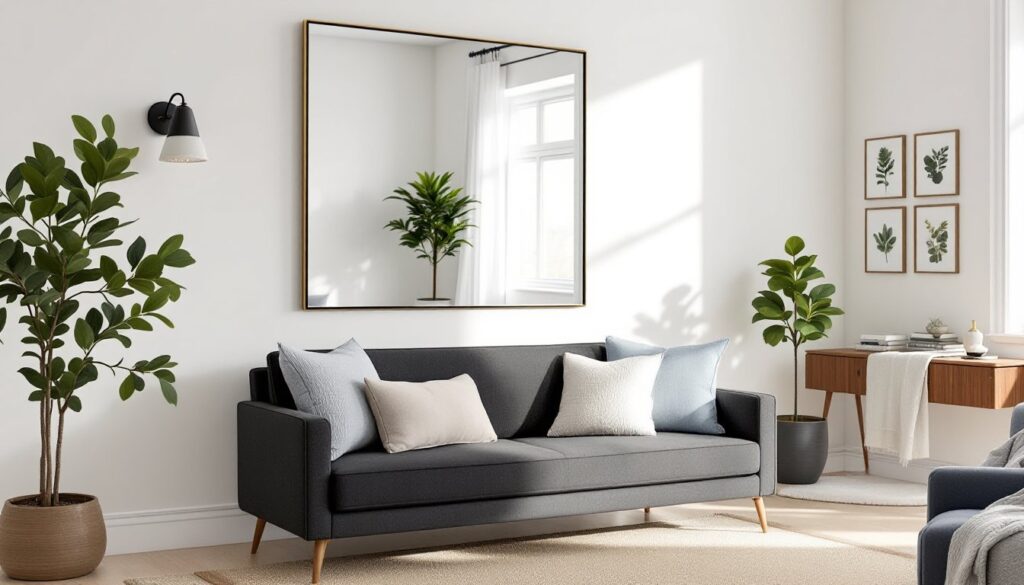
Hanging a large mirror above the sofa is the most common placement, and for good reason. The sofa typically occupies the longest wall, and a mirror centered above it creates instant symmetry. For proper proportion, the mirror should span two-thirds to three-quarters the width of the sofa. A 90-inch sofa pairs well with a 60- to 68-inch horizontal mirror.
Mount the mirror 6 to 8 inches above the sofa back to maintain visual connection without crowding. Use heavy-duty wall anchors rated for the mirror’s weight, ideally anchored into studs behind drywall. A 50-pound mirror requires two anchors minimum: anything heavier benefits from a French cleat system for distributed load.
Avoid placing the mirror where it reflects clutter, awkward angles, or blank walls. The reflection should show something worth seeing, a window, an attractive light fixture, or layered decor on the opposite wall.
Floor-to-Ceiling Mirrors for Dramatic Effect
Full-height mirrors, typically 72 to 96 inches tall, create vertical emphasis and work especially well in rooms with low ceilings (8 feet or less). Leaning a floor mirror against the wall is the easiest installation method and avoids drilling into studs, but the mirror must have a weighted or reinforced base to prevent tipping. Models without adequate stability should be secured with furniture straps anchored to wall studs.
Alternatively, wall-mounted floor-to-ceiling mirrors require professional installation if they exceed 75 pounds. Frameless options reduce visual bulk but demand precise mounting, any tilt or gap becomes immediately obvious. Framed mirrors are more forgiving and add architectural detail.
Position floor mirrors in corners to maximize light reflection and spatial expansion. A corner placement also keeps the mirror out of high-traffic pathways, reducing the risk of accidental bumps or smudges.
Popular Frame Styles and Shapes for Large Living Room Mirrors
Frame choice determines whether a mirror reads traditional, modern, or transitional. Arched mirrors (often 80+ inches tall) suit spaces with high ceilings or traditional architecture. The curved top softens angular furniture and pairs well with crown molding or coffered ceilings.
Rectangular mirrors with thin metal frames (brass, matte black, or brushed nickel) fit modern and industrial interiors. Frames under 2 inches wide keep the focus on the reflection rather than the mirror itself. These work well in minimalist rooms where ornate frames would compete with clean lines.
Chunky wood frames (4 to 6 inches wide) add warmth and texture, making them ideal for farmhouse, rustic, or transitional styles. Reclaimed wood frames introduce character but may require sealing to prevent splintering. Factory-finished frames in weathered oak or walnut tones are lower-maintenance alternatives.
Frameless or beveled-edge mirrors eliminate visual boundaries, creating a sleek, gallery-like effect. These work in contemporary spaces but show mounting hardware and wall imperfections more readily than framed options. Beveled edges (typically 1 inch wide) catch light and add subtle detail without a full frame.
Round and oval mirrors soften rooms dominated by straight lines and right angles. A 48-inch round mirror can anchor a wall just as effectively as a rectangular one, but the lack of edges makes proportion trickier, ensure the diameter relates to nearby furniture widths to avoid a floating, disconnected look.
Design Tricks to Enhance Natural Light and Space
Positioning a mirror directly opposite a window reflects the most light but can create glare during peak sun hours. Angling the mirror 15 to 30 degrees off-axis reduces glare while still capturing daylight. Alternatively, place the mirror on a wall perpendicular to the window, it still brightens the room without the harsh bounce.
In rooms with only one window, hang the mirror on the wall adjacent to the window rather than opposite. This spreads light laterally across the room instead of sending it back toward the source.
Mirrors also amplify artificial light. Position a large mirror to reflect a chandelier, pendant cluster, or table lamp to multiply the light output. This is especially effective in evening-use spaces where natural light is irrelevant.
To enhance perceived space, avoid reflecting walls or dead zones. Angle or position the mirror to reflect layered elements, a bookshelf, a gallery wall, or a textured accent wall. The reflection should add depth, not just repeat emptiness.
Vertical mirrors make ceilings appear higher: horizontal mirrors widen narrow rooms. A 36-inch-wide by 72-inch-tall mirror stretches a room visually, while a 60-inch-wide by 40-inch-tall mirror broadens it.
Styling Your Big Mirror: Decor and Furniture Pairing Tips
Large mirrors don’t need heavy decoration, they’re the decor. But thoughtful pairing prevents them from feeling stark or disconnected.
Flank the mirror with matching sconces for symmetry and functional task lighting. Mount sconces 60 to 66 inches from the floor (standard eye level) and space them to align with the mirror’s outer thirds, not its edges.
Layer artwork or shelving on adjacent walls to create visual conversation. A large mirror on one wall balanced by a gallery wall or floating shelves on the perpendicular wall distributes attention and avoids a single-point focus.
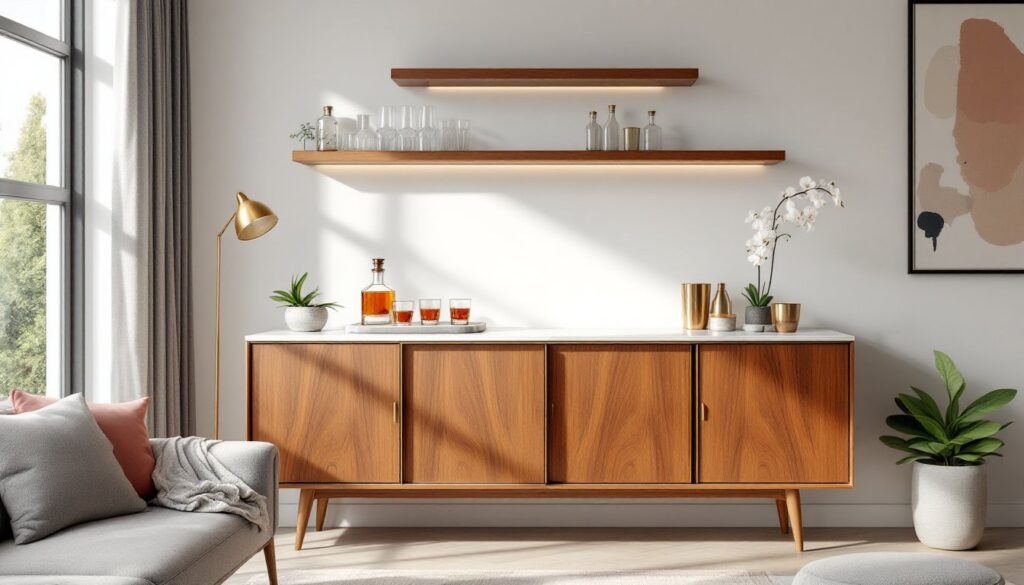
Ground the mirror with furniture. A console table, credenza, or low bookshelf beneath a wall-mounted mirror creates a composed vignette. Keep the furniture piece 12 to 18 inches narrower than the mirror to maintain proportion.
Add greenery in front of or beside the mirror. A tall potted plant (fiddle-leaf fig, bird of paradise, or snake plant) softens hard edges and introduces organic texture. The reflection doubles the greenery’s visual impact.
Avoid clutter in the mirror’s sightline. If the reflection shows a messy coffee table, overflowing storage, or unattractive HVAC vents, reposition furniture or the mirror.
Use the mirror to repeat color. If the mirror reflects a blue accent wall or colorful throw pillows, it reinforces the room’s palette without adding new elements. This cohesion trick makes color-blocking feel intentional rather than random.