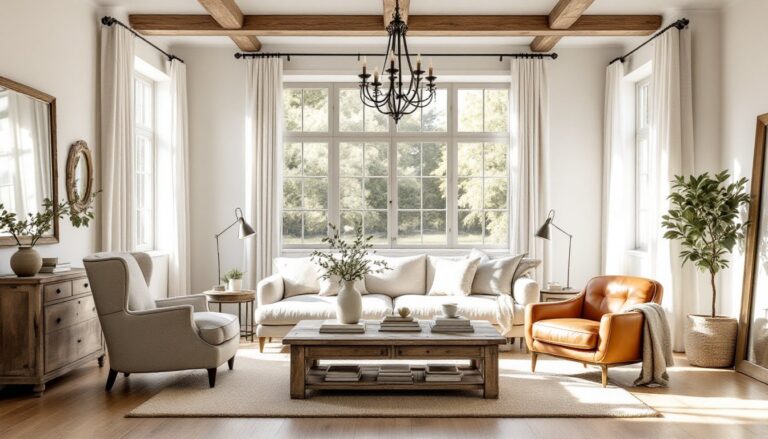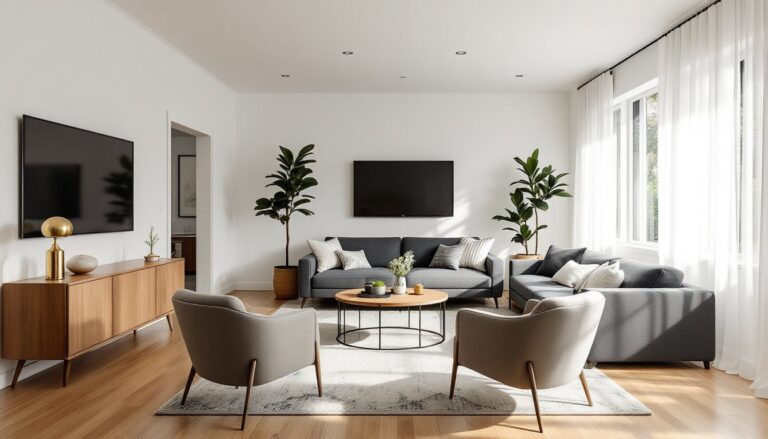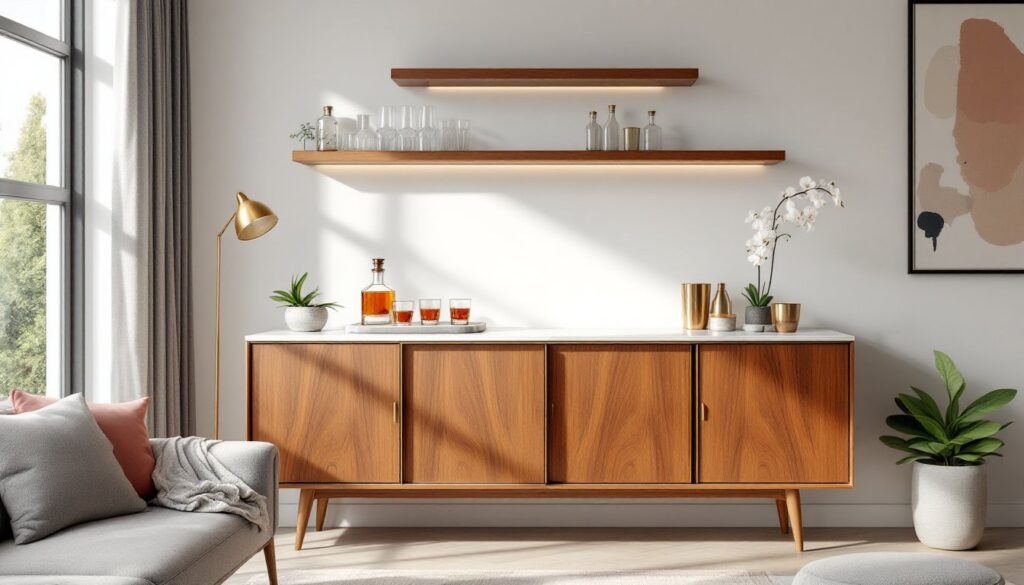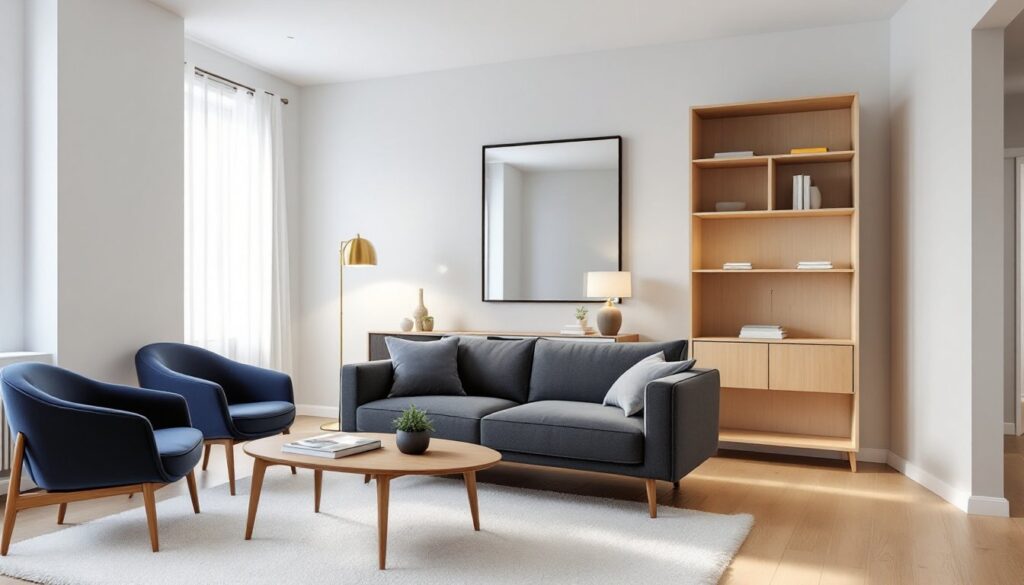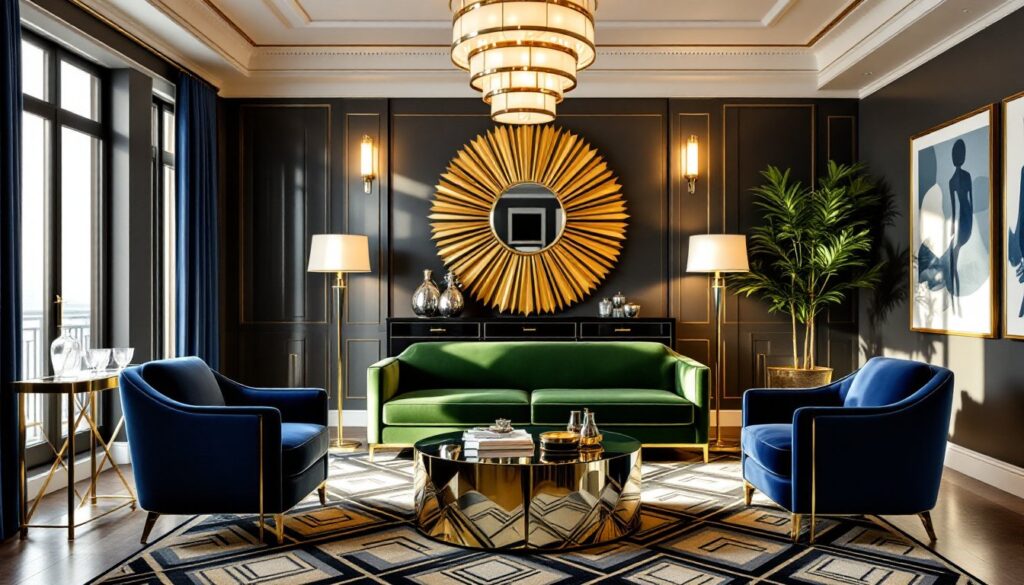

Art Deco’s bold geometry, luxurious materials, and unapologetic glamour made it the defining design language of the 1920s and ’30s, and it’s roaring back into living rooms across the country. Unlike minimalist trends that whisper, Art Deco shouts with mirrored surfaces, velvet upholstery, and angular patterns that demand attention. Homeowners drawn to this style aren’t looking for subtle accents: they want drama, symmetry, and a room that feels like stepping onto a Gatsby film set. This guide breaks down the essential elements, from color blocking and furniture selection to lighting and accessories, with practical advice for bringing authentic Art Deco style into a modern living space.
Table of Contents
ToggleKey Takeaways
- Art Deco living room ideas prioritize geometric symmetry, rich materials, and bold contrast—such as black and gold or emerald green paired with metallics—over subtle, minimalist design.
- Statement furniture pieces like velvet sofas with chrome legs, mirrored coffee tables, and lacquered credenzas form the foundation of an authentic Art Deco living room aesthetic.
- Geometric patterns including chevrons, zigzags, sunbursts, and Greek keys appear in rugs, wallpaper, and upholstery to reinforce the style’s architectural precision and drama.
- Lighting fixtures should be sculptural and theatrical—tiered chandeliers, tripod lamps with cone shades, and metallic finishes amplify the room’s polished glamour and visual sparkle.
- Accessories like oversized geometric mirrors, period-inspired artwork in bold frames, and jewel-toned throw pillows complete the look, with each piece carefully curated rather than randomly placed.
- Art Deco living room success requires commitment to the style’s unapologetic boldness; start with one or two statement pieces and layer in metallics and mirrors to create a timelessly elegant, dramatically engaging space.
What Defines Art Deco Style in Living Rooms?
Art Deco emerged between World War I and World War II, blending luxury with industrial-age optimism. The style pulls from Egyptian motifs, Cubist art, and machine-age streamlining, think chrome, glass, and polished wood.
In living rooms, three principles dominate: geometric symmetry, rich materials, and contrast. Unlike the organic curves of Art Nouveau, Art Deco favors sharp angles, chevrons, zigzags, sunburst patterns, and stepped forms. Symmetry matters: furniture placement, wall treatments, and decorative elements often mirror across a central axis.
Materials separate authentic Art Deco from surface-level theming. Period rooms featured lacquered wood, polished metals (chrome, brass, nickel), mirrors, and exotic veneers like zebrawood or burl walnut. Upholstery leaned toward velvet, silk, and leather in saturated jewel tones.
Contrast shows up everywhere: black and gold, navy and cream, emerald green against white marble. The style doesn’t do monotone, it thrives on visual tension. Homeowners tackling an Art Deco living room should prioritize bold pairings over safe neutrals.
Essential Color Palettes for Art Deco Living Rooms
Art Deco color schemes split into two camps: high-contrast drama and metallic glamour. The first leans on black, white, and deep jewel tones, emerald, sapphire, ruby red. The second layers golds, silvers, bronzes, and champagnes over neutral bases.
For walls, consider deep navy, charcoal gray, or rich teal as statement colors. These provide the moody backdrop that makes metallic accents pop. Alternatively, a glossy white or cream wall lets furniture and art carry the color load. High-gloss or satin finishes work better than flat paint, they reflect light and enhance the room’s polished feel.
Black and gold remains the quintessential Art Deco pairing. Use it in trim, furniture frames, and accessories. A black lacquered console with gold hardware, or gold-framed mirrors against black wallpaper, hits the mark without subtlety.
Jewel tones (emerald green velvet sofas, sapphire blue armchairs, amethyst accent pillows) add richness without reading as dated. Pair these with metallic elements, a brass coffee table or chrome floor lamp, to keep the palette from feeling too soft.
Avoid pastels and earth tones. Art Deco doesn’t do blush pink or terracotta. If a homeowner wants a lighter palette, stick to crisp whites, creams, and champagnes with metallic accents.
Statement Furniture Pieces That Capture the Era
Art Deco furniture combines streamlined silhouettes with luxury materials. Look for pieces with geometric shapes, stepped profiles, and polished finishes.
Sofas and seating: A curved or tuxedo-style sofa in velvet nails the look. Channel-tufted backs and chrome or brass legs reinforce the period. Avoid overstuffed sectionals, Art Deco seating tends toward sleek, tailored forms. Armchairs with winged backs or fan-shaped upholstery add sculptural interest.
Coffee tables: Go for mirrored surfaces, lacquered wood, or marble tops with geometric metal bases. Round tables with sunburst patterns or rectangular tables with stepped edges both work. A glass top over a chrome or brass base keeps sight lines open while maintaining the metallic gleam.
Sideboards and cabinets: Lacquered credenzas in black or deep wood tones with brass hardware capture the era’s love of shine and symmetry. Look for stepped profiles, inlaid patterns, or exotic veneers. These pieces often double as focal points and storage.
Bar carts: Rolling brass or chrome bar carts with glass shelves fit both the style and the cocktail culture of the 1920s. They’re practical for entertaining and visually lightweight.
When sourcing furniture, vintage and reproduction pieces both work, but avoid cheap imitations. Solid wood with real veneer, metal (not plastic), and quality upholstery make the difference between authentic style and costume set dressing.
Geometric Patterns and Bold Textures
Patterns in Art Deco living rooms lean geometric and symmetrical: chevrons, zigzags, Greek keys, stylized florals, and sunbursts. These show up in rugs, wallpaper, upholstery, and decorative screens.
Area rugs: A geometric wool or silk rug anchors the room and introduces pattern without clutter. Look for designs with repeating motifs in contrasting colors, black and gold chevrons, navy and cream Greek keys, or abstract sunburst patterns. Keep borders clean and symmetrical.
Wallpaper and wall treatments: Metallic wallpaper with geometric patterns adds instant drama. Options include fan motifs, stepped rectangles, or Art Deco-inspired damasks. Alternatively, consider accent walls in high-gloss paint or wood paneling with vertical or stepped inlays. Wall molding in geometric patterns (picture frame molding, board-and-batten in stepped configurations) reinforces the style on a budget.
Textiles: Layer velvet, silk, faux fur, and leather for tactile richness. Throw pillows in geometric embroidery or beaded designs add visual weight. Window treatments should be floor-length and structured, think heavy drapes in solid jewel tones with metallic tiebacks, not sheer linen.
Decorative screens: Folding screens with geometric cutouts or mirrored panels serve as room dividers and sculptural accents. They’re functional in open-plan spaces and visually reinforce symmetry.
Lighting Fixtures That Make an Impact
Lighting in Art Deco rooms isn’t just functional, it’s sculptural and theatrical. Fixtures feature geometric shapes, tiered designs, and materials like chrome, glass, and crystal.
Chandeliers: A tiered or stepped chandelier in chrome or brass makes a centerpiece. Look for designs with geometric glass shades, crystal accents, or sunburst forms. Sputnik-style fixtures (though mid-century) share enough geometric DNA to work in eclectic Art Deco spaces.
Floor and table lamps: Tripod floor lamps with cone or globe shades, or table lamps with stepped bases and frosted glass shades, fit the era. Metallic finishes (polished brass, chrome, nickel) are non-negotiable. Avoid rustic or organic materials.
Wall sconces: Geometric sconces with frosted glass or mirrored backplates flank mirrors, artwork, or doorways. Symmetrical placement reinforces the style’s love of balance.
Recessed and accent lighting: While not period-accurate, recessed lighting with dimmer switches lets homeowners control mood. Use it to highlight architectural details, artwork, or mirrored surfaces. LED strip lighting behind crown molding or inside niches adds modern functionality with a nod to the era’s love of glow and shimmer.
When selecting fixtures, prioritize statement over subtlety. Art Deco rooms should sparkle, literally. Mirrors, metallics, and glass amplify light, so every fixture does double duty.
Finishing Touches: Accessories and Decorative Elements
Accessories in Art Deco living rooms should feel curated, not cluttered. Each piece earns its place through material, form, or historical nod.
Mirrors: Oversized geometric mirrors, round with sunburst frames, rectangular with stepped edges, or fan-shaped, are essential. They reflect light, enlarge the space, and reinforce symmetry. Hang them above mantels, consoles, or sofas.
Artwork: Look for period-inspired posters (travel, jazz age, industrial themes), abstract geometric prints, or portraits in bold frames. Black lacquer or gold frames work best. Avoid rustic or overly modern pieces.
Sculptures and objets: Chrome or brass sculptures (abstract forms, stylized animals, dancers), crystal decanters, and lacquered trays add dimension. Group items in odd numbers on shelves or console tables.
Vases and planters: Ceramic or glass vases in geometric shapes (cylinders, cones, stepped forms) hold bold floral arrangements. Think calla lilies, orchids, or dramatic branches, not wildflower meadows.
Throw pillows and blankets: Use velvet or silk pillows in jewel tones with geometric embroidery, tassels, or beading. Faux fur throws in white, black, or metallic hues drape over seating.
Books and magazines: Stack vintage or vintage-style books with bold covers on coffee tables. Art, architecture, and fashion titles fit the theme.
Avoid: farmhouse signage, boho macrame, or anything distressed. Art Deco is polished, never shabby.
Conclusion
Art Deco living rooms reward boldness, this isn’t a style for the timid or those chasing resale neutrality. Success comes from committing to geometric patterns, rich materials, and unapologetic contrast. Start with one or two statement pieces (a velvet sofa, a geometric rug, a tiered chandelier), then layer in metallics, mirrors, and carefully chosen accessories. The result? A space that feels both timelessly elegant and unashamedly dramatic.