
Getting a rug’s placement wrong can make even expensive furniture look like it’s floating in limbo. A 9×12 rug hits the sizing sweet spot for most living rooms, large enough to anchor a full seating arrangement without overwhelming the space or the budget. But buying the right size is only half the battle. The difference between a room that feels pulled together and one that looks like a showroom floor gone wrong often comes down to inches, not feet. This guide walks through the proven layout principles, room-specific arrangements, and common pitfalls that separate a well-designed living room from one that just has a rug in it.
Table of Contents
ToggleKey Takeaways
- A 9×12 rug is the ideal size for most living rooms, covering 108 square feet and working best in spaces between 12×15 and 14×18 feet without overwhelming the space or budget.
- Always keep all front furniture legs (or all four legs of key pieces) on the 9×12 rug with 12 to 24 inches of exposed flooring around the perimeter to create a balanced, anchored look.
- Center the rug on your seating area rather than the room’s architectural center, especially with off-center fireplaces or angled sectionals that require functional zone alignment.
- Invest in a proper felt-and-rubber or PVC rug pad to prevent shifting, scratching hardwood floors, and bunching—avoid cheap alternatives like shelf liner that degrade under furniture weight.
- Rotate your 9×12 rug 180 degrees every 6 to 12 months to distribute wear evenly in traffic lanes and under furniture, potentially doubling its usable life.
- Match your 9×12 rug to a sofa between 84 and 96 inches long; oversized sectionals (110+ inches) will dwarf the rug while apartment-sized loveseats may look lost.
Why a 9×12 Rug Is the Sweet Spot for Most Living Rooms
A 9×12 foot rug covers 108 square feet, making it the Goldilocks choice for living rooms between 12×15 and 14×18 feet. It’s large enough to fit all front furniture legs (or all four legs of key pieces) while leaving a visual border of flooring around the perimeter, typically 12 to 18 inches of exposed floor on each side.
This size works because it respects the “furniture on, furniture off” principle without requiring a custom order or the cost jump to a 10×14. Standard residential living rooms rarely exceed 16 feet in width, and a 9-foot width allows the rug to center properly without crowding doorways or baseboards.
From a material and budget standpoint, 9×12 is a mass-produced size. Manufacturers stock it heavily, which means better selection in everything from natural fiber jute to low-pile synthetics and hand-tufted wool. Pricing is competitive, and replacements or rotations down the road won’t require special ordering.
It’s also the largest size most homeowners can handle solo during installation. A 9×12 wool rug weighs roughly 60 to 80 pounds depending on pile density. Anything larger typically needs two people and creative doorway angling. For DIYers tackling a refresh without hiring help, that’s a real consideration.
The Golden Rules of 9×12 Rug Placement
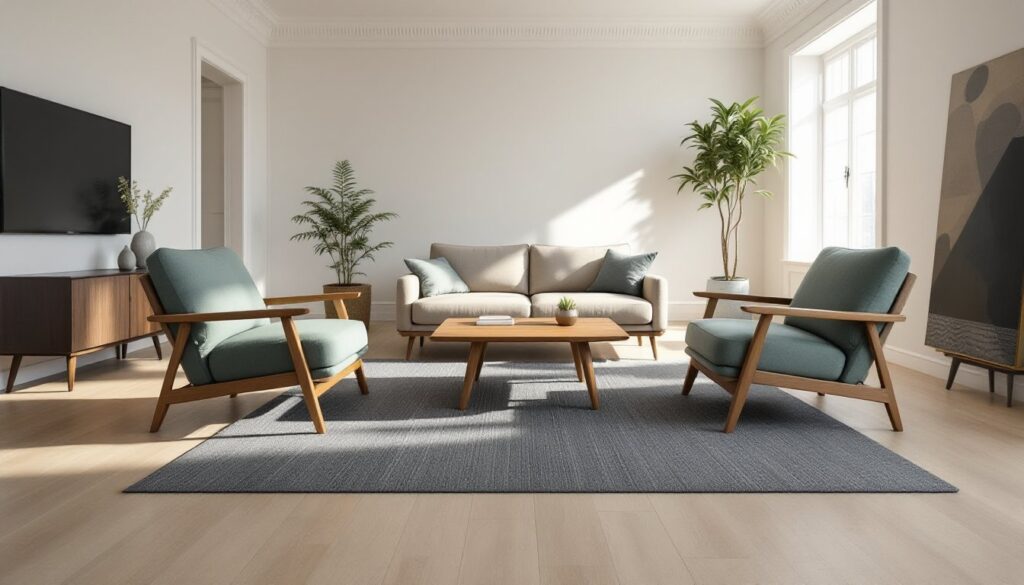
Rule one: All front legs on, or all four legs on. The worst rookie move is letting just the coffee table sit on the rug while sofas and chairs float off it. Front legs of the sofa, loveseat, and accent chairs should rest on the rug at minimum. Ideally, all four legs of each piece sit fully on the rug for a cohesive, anchored look.
Rule two: Leave 12 to 24 inches of exposed flooring around the perimeter. This creates a visual frame and prevents the rug from looking like wall-to-wall carpeting gone wrong. In smaller rooms (under 13 feet wide), 12 inches is acceptable. Larger spaces benefit from 18 to 24 inches. The goal is to see a consistent border on all sides, not a rug shoved against one wall.
Rule three: Center the rug on the seating area, not necessarily the room. If the living room has an off-center fireplace or an angled sectional, the rug should center on the functional seating zone, not the architectural footprint. Measure from the front of the sofa to the opposing chairs, that’s the axis the rug should balance on.
Rule four: Account for traffic flow. The rug shouldn’t block natural pathways between doorways or create trip hazards at transitions. If the main walkway cuts across the seating area, ensure the rug edges are square to the path and use a low-profile rug pad (¼-inch thickness or less) to prevent curling and slipping. Look for pads with a rubber or PVC grip suitable for the floor type, felt-rubber hybrids work on hardwood, while PVC mesh grips better on tile.
Rule five: Mind the furniture scale. A 9×12 rug pairs best with a sofa between 84 and 96 inches long. Oversized sectionals (110+ inches per side) can dwarf the rug, while apartment-sized loveseats may look lost. If furniture is undersized, consider flanking the sofa with substantial side tables or a pair of larger accent chairs to fill the visual footprint.
Best 9×12 Rug Layouts for Different Living Room Configurations
Standard Sofa and Chairs Arrangement
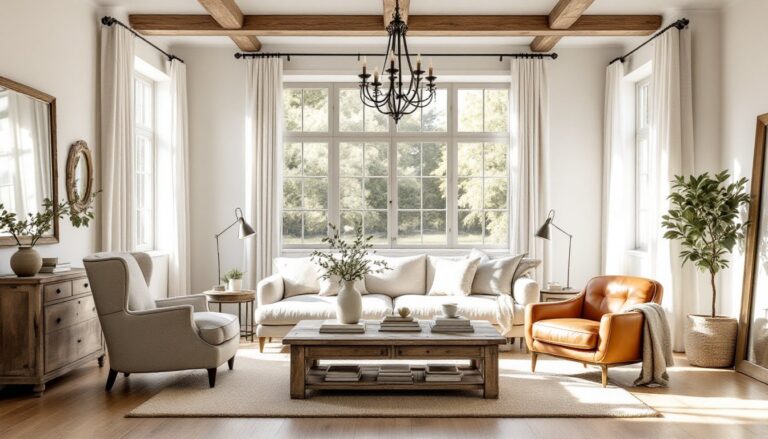
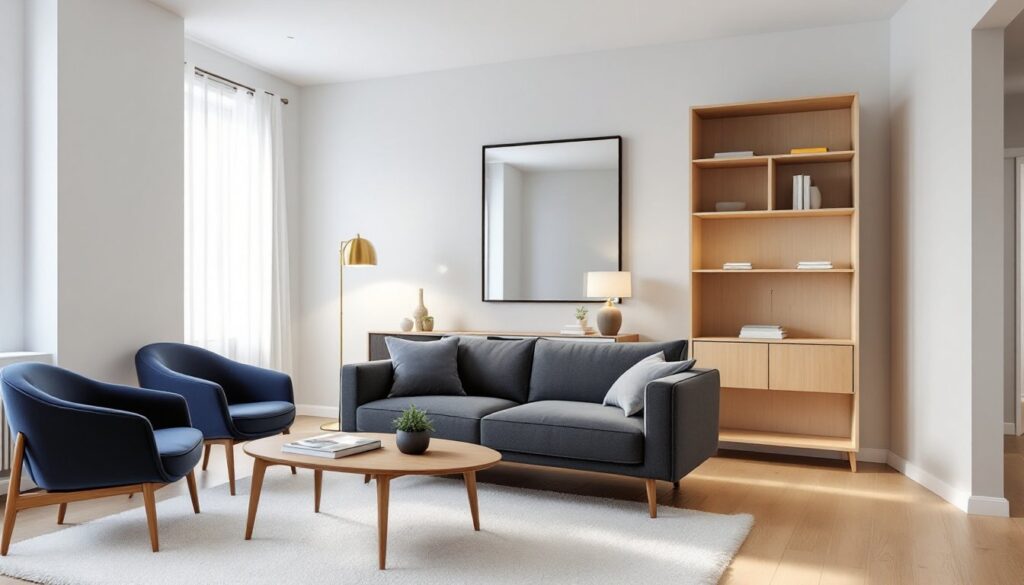
For a classic setup, sofa facing two accent chairs with a coffee table in between, the 9-foot width runs parallel to the sofa. Position the sofa so its front legs sit 6 to 12 inches onto the rug. The coffee table centers on the rug, and the two chairs opposite should have at least their front legs on the rug as well.
If the sofa is 90 inches wide, leaving roughly 6 inches of rug visible on either side creates balanced negative space. The 12-foot length should extend beyond the coffee table toward the chairs, ideally placing all four chair legs on the rug if the room allows. In tighter spaces, front legs only is acceptable.
Rug pad recommendation: Use a non-slip pad cut 1 to 2 inches smaller than the rug on all sides. This prevents pad edges from peeking out and keeps the rug from shifting when furniture is moved for vacuuming.
If the room includes a console table or media stand along one wall, the rug should stop 6 to 12 inches short of that piece. Rugs shouldn’t run under media consoles unless all four legs of the console sit fully on the rug, partial placement makes the whole setup look accidental.
Sectional Sofa Layouts
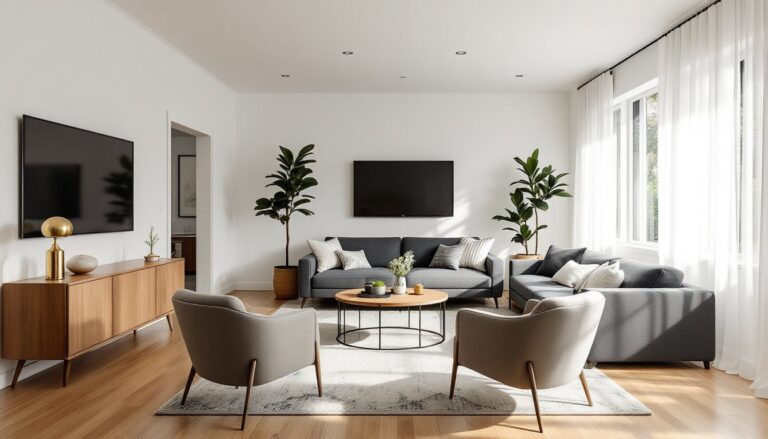
Sectionals complicate things. An L-shaped sectional with a chaise works best when the rug is oriented so the 12-foot length runs along the long side of the sectional. The chaise and the main seating section should both have front legs (or all legs, if the sectional is compact) resting on the rug.
For a sectional roughly 10 feet on one side and 6 feet on the return, position the rug so there’s equal overhang on the open sides, typically 12 to 18 inches extending past the end of the sectional toward an accent chair or floor lamp. This balances the visual weight.
Floating the sectional (pulling it several feet off the wall) is often necessary with a 9×12 rug in smaller rooms. If the sectional sits flush against two walls, the rug may not have enough coverage to reach the front legs. In that case, either float the sectional 18 to 24 inches off the walls or size up to a 10×14 rug.
Corner placement tip: If the sectional sits in a corner, the rug should angle into the room, not shoved into the corner. Leave at least 12 inches of floor visible behind the sectional. This prevents a cramped, “rug as wall-to-wall” appearance and allows for baseboard cleaning and furniture adjustments.
For U-shaped or oversized sectionals, a 9×12 might not cut it. Sectionals over 140 inches total perimeter typically need a 10×14 or larger. Forcing a too-small rug under a large sectional leaves the piece looking disconnected and the rug looking like an afterthought.
Common Mistakes to Avoid with 9×12 Rug Placement
Mistake one: Pushing the rug against one wall. This creates an unbalanced look and makes the seating area feel shoved to one side. Always aim for relatively equal borders of exposed floor on all sides, even if it means floating furniture away from walls.
Mistake two: Choosing pattern or pile direction carelessly. Directional patterns (stripes, gradients, or motifs with a clear “up”) should run the length of the room or align with the sofa’s orientation. Pile direction matters on cut-pile or shag rugs, vacuuming against the pile raises it, but foot traffic should run with the pile to minimize matting.
Mistake three: Skipping the rug pad. Even on carpet, a thin pad prevents bunching and adds cushion. On hardwood, it’s non-negotiable for preventing scratches and slippage. Don’t use cheap gridded shelf liner, it degrades, sticks to finishes, and fails under furniture weight. Invest in a proper felt-and-rubber or PVC rug pad rated for the floor type.
Mistake four: Ignoring door swing. Measure door clearance before committing to rug placement. Standard interior doors need about ½ inch clearance. If the rug (plus pad) is thicker than that, the door will catch. High-pile or shag rugs often measure ¾ inch to 1½ inches with pad. In those cases, adjust the rug placement or trim the door. Door trimming requires a handsaw or oscillating multi-tool and should remove no more than ¼ inch at a time to avoid compromising the door’s structural integrity.
Mistake five: Mixing undersized furniture. A 9×12 rug paired with a 72-inch loveseat and two small side chairs looks empty and unbalanced. Either upsize the furniture or downsize the rug to an 8×10. The rug should feel like it’s holding the furniture together, not swallowing it.
Mistake six: Forgetting about rug rotation. Rugs wear unevenly under furniture and in traffic lanes. Every six to twelve months, rotate the rug 180 degrees to distribute wear. Mark the underside with a fabric pen to track orientation. This simple habit can double the usable life of a quality rug.
Conclusion
A 9×12 rug anchors a living room when it’s placed with intention, not just rolled out and called done. The difference between a layout that works and one that doesn’t comes down to consistent borders, proper leg placement, and matching the rug scale to the furniture it supports. Measure twice, commit once, and don’t skip the pad.