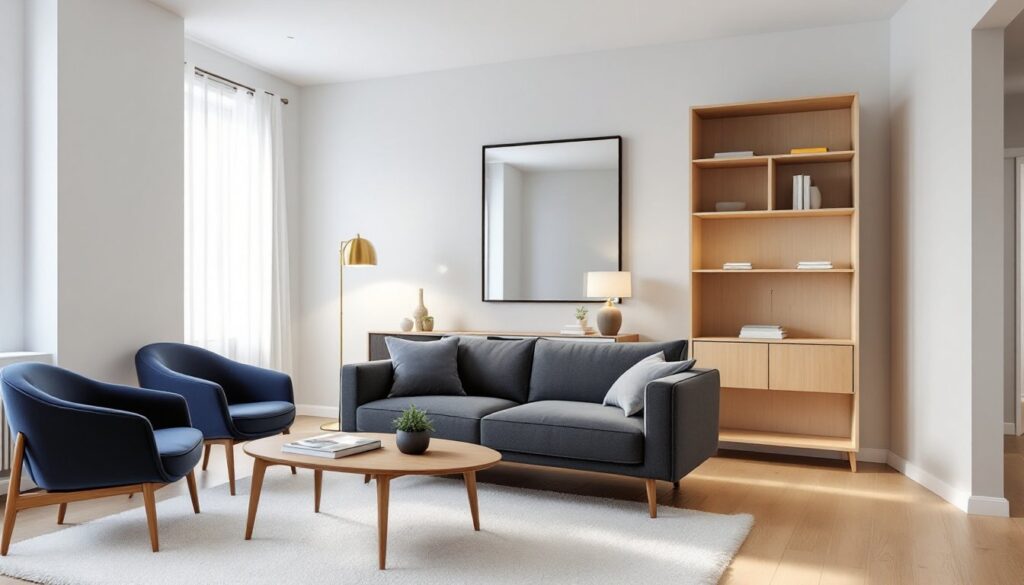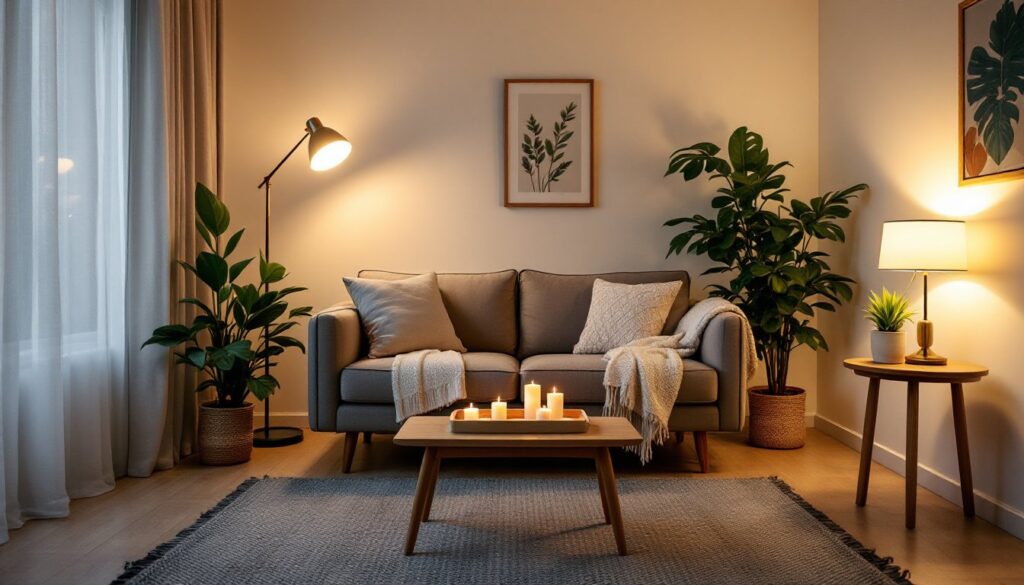

Creating a cozy living room in an apartment doesn’t require a gut renovation or a massive budget, it’s about layering the right elements in a space-constrained environment. Renters face unique challenges: no structural changes, limited square footage, and the need to keep security deposits intact. But cozy isn’t about size. It’s about texture, light control, intentional color choices, and furniture that works double-duty. These 15 practical ideas focus on what renters can actually do, removable, reversible, and renter-friendly upgrades that transform a bland box into a warm, livable retreat without calling the landlord for permission.
Table of Contents
ToggleKey Takeaways
- Layer textiles like area rugs, throw blankets, and mixed-texture pillows to instantly add warmth and acoustic softness to apartment living room spaces without permanent modifications.
- Replace harsh overhead lighting with layered lighting at multiple heights—floor lamps, table lamps, and warm-white (2700K–3000K) bulbs—to create a cozy ambiance that small apartments require.
- Choose warm neutral colors like greige, taupe, and muted sage for walls to create enclosure; if painting isn’t allowed, use removable peel-and-stick wallpaper or large-scale artwork instead.
- Select appropriately scaled, multifunctional furniture with exposed legs and tested comfort cushions to maximize usable floor space in apartment living rooms while prioritizing livability.
- Decorate with one or two larger art pieces hung at eye level, mirrors positioned opposite windows, and floating shelves filled asymmetrically to add personality without visual clutter.
- Bring in low-maintenance potted plants and natural materials like woven baskets and wooden trays to add organic texture and signal a lived-in, intentional space that feels like home.
Layer Textures and Fabrics for Instant Warmth
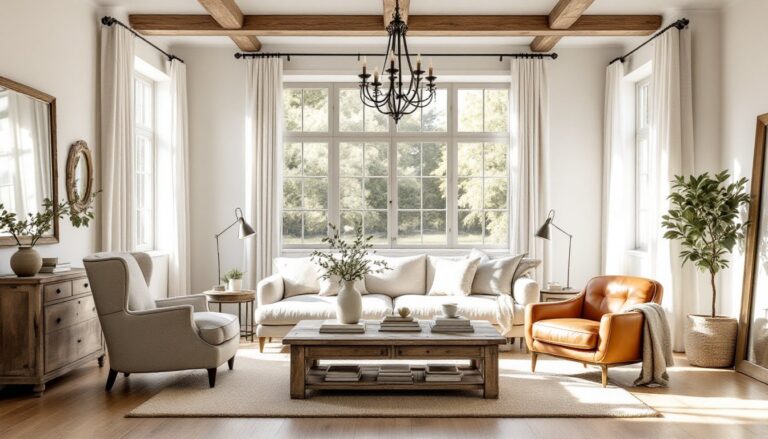
The fastest way to soften a sterile apartment living room is through layered textiles. Hard surfaces, laminate flooring, painted drywall, metal window frames, reflect sound and light, making spaces feel cold. Fabrics absorb both, creating acoustic warmth and visual softness.
Start with an area rug sized appropriately for the seating arrangement. In a living room, the front legs of sofas and chairs should sit on the rug, anchoring the furniture grouping. An 8′ × 10′ rug works for most apartment living rooms: go for wool, jute, or high-pile synthetics for texture underfoot. Avoid thin, flat rugs, they add color but not coziness.
Next, layer throw blankets over seating. Chunky knit throws, faux fur, or waffle-weave cotton each bring a different tactile quality. Drape one over the arm of a sofa, fold another at the foot of a chair. They’re functional (apartment heating is notoriously uneven) and visually signal comfort.
Pillow combinations matter more than most renters realize. Mix pillow sizes, pair 20″ × 20″ squares with 12″ × 20″ lumbars. Vary textures: linen, velvet, boucle, or even leather. Stick to three or four pillows per seating piece to avoid the “pillow wall” problem that makes furniture unusable.
Finally, swap out builder-grade roller shades or blinds for fabric curtains. Hang curtain rods as close to the ceiling as possible and let panels puddle slightly on the floor or hover ½” above it. This vertical line draws the eye up and makes low ceilings feel taller. Linen, velvet, or thermal-backed cotton curtains add texture while improving insulation and light control. Use removable adhesive hooks or tension rods if drilling isn’t allowed.
Master the Art of Lighting for a Cozy Ambiance
Overhead lighting, especially the single-bulb ceiling fixture common in apartment living rooms, is the enemy of cozy. It casts flat, even light that eliminates shadow and depth, making rooms feel like waiting areas.
Instead, use layered lighting at multiple heights. Start with a floor lamp in a corner, preferably one with a fabric shade that diffuses light. Aim for 2700K–3000K color temperature bulbs (warm white), which mimic incandescent glow. LED bulbs at this temperature range won’t skew blue or clinical.
Add a table lamp on a side table or console. This creates a second light source at a different height, breaking up the visual plane and adding dimension. Use bulbs in the 40W-equivalent range (roughly 450 lumens) to avoid overpowering the space.
String lights or LED tape lighting tucked behind furniture, along a bookshelf, or around a window frame add subtle ambient glow without taking up floor space. Battery-operated options work well for renters who can’t add outlets. Skip the cool-white LEDs, they read as dorm-room, not cozy.
If the budget allows, a dimmer switch is worth installing (and easy to reverse before move-out). Lutron makes plug-in dimmer modules that work with floor and table lamps without any wiring. Dimmable lighting gives control over mood, something a single overhead switch can’t touch.
Candles (real or battery-operated) add the flicker factor that no static bulb can replicate. Use unscented or lightly scented pillar candles in groups of three on a tray or shelf. The movement of flame, or a convincing fake, signals warmth in a way our brains are hardwired to recognize.
Choose the Right Color Palette for Small Spaces
The advice to “paint everything white to make it look bigger” ignores the fact that cozy and spacious are different goals. White walls can feel sterile in a small apartment living room, especially under harsh lighting.
Instead, consider warm neutrals and mid-tones. Colors like greige, soft taupe, terracotta, or muted sage create enclosure in a good way, they wrap the room rather than push it away. In small spaces, darker walls can actually make boundaries dissolve, especially in low, ambient lighting.
Most landlords allow repainting as long as walls are returned to the original color before move-out. Keep a record of the original paint code (sometimes listed on the breaker box or in lease documents). One gallon of paint covers roughly 350–400 square feet, enough for most apartment living rooms with two coats.
If painting isn’t an option, bring color through large-scale artwork, curtains, or an accent wall using peel-and-stick wallpaper. Removable wallpaper has improved dramatically: brands now offer textured, pre-pasted options that hold up for years and remove cleanly. Apply it to the wall behind the sofa or the one facing the entry, it anchors the room without committing every surface.
Keep the color temperature consistent across the room. Mixing cool grays with warm beiges creates visual tension that reads as “mismatched,” not “layered.” Stick to one side of the temperature spectrum and vary the intensity instead, lighter and darker versions of the same warm neutral work better than a mix of warm and cool tones.
Maximize Comfort with Smart Furniture Choices
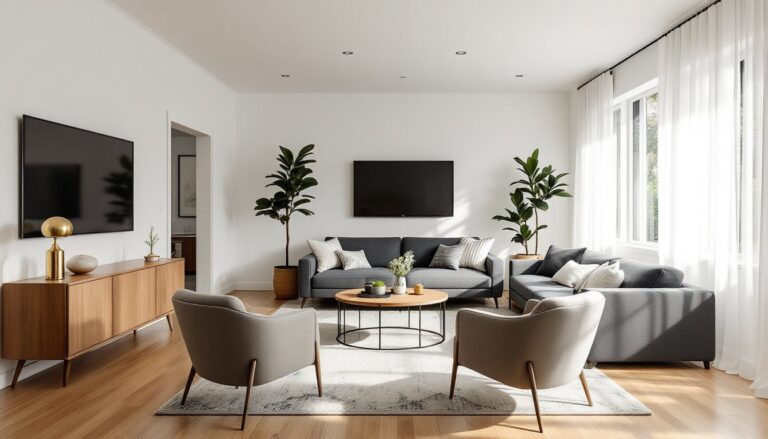
In a small apartment, every piece of furniture has to justify its footprint. Seating should be comfortable first, but also appropriately scaled. An oversized sectional might look cozy in a showroom, but in a 12′ × 14′ living room, it eats the floor plan and limits movement.
Measure the room and map furniture placement before buying anything. Leave at least 30″–36″ of clearance for walkways. A sofa should sit 12″–18″ from a coffee table: closer feels cramped, farther feels disconnected.
Apartment-scale sofas (72″–76″ long) fit better than full-size models (84″+). Look for pieces with exposed legs rather than skirted bases, the visible floor beneath creates a sense of openness. Avoid bulky arms: track arms or English roll arms take up less visual and physical space than pillow-top or lawson styles.
If the living room doubles as a guest room or workspace, multifunctional furniture is non-negotiable. A storage ottoman serves as a coffee table, extra seating, and a place to stash throw blankets. A console table behind the sofa can function as a desk or bar cart. Nesting tables take up minimal space but expand when needed.
Seating comfort comes down to cushion construction. High-density foam (1.8–2.0 lbs/cubic ft) holds up better than low-density, especially in furniture that gets daily use. Down-wrapped foam cores offer the best of both, supportive but soft. Test before buying: if the showroom piece feels too firm, it’ll soften slightly with use, but a too-soft sofa only gets worse.
Add Personality with Wall Decor and Art
Bare walls make an apartment feel temporary. But overloading them with tiny frames creates visual clutter, not coziness.
Start with one or two larger pieces rather than a gallery wall of small prints. A single 24″ × 36″ framed print or canvas above the sofa makes a stronger statement than six 8″ × 10″ frames scattered around. If a gallery wall is the goal, keep frames in the same finish (all black, all wood, or all brass) and limit the number to five or seven pieces. Odd numbers arrange more naturally.
Hang art at eye level, about 57″–60″ to the center of the piece. In a living room where people are seated, err on the lower end. Art hung too high disconnects from the furniture below it.
Removable hanging solutions preserve walls and security deposits. Command Picture Hanging Strips hold up to 16 lbs per set and remove cleanly, though they work best on painted drywall, not textured or wallpapered surfaces. For heavier pieces, monkey hooks or brick clips (if the building has exposed brick) work without drywall anchors.
Mirrors amplify light and make small rooms feel larger, but placement matters. Position a mirror opposite a window to reflect natural light, not opposite a blank wall. Leaner mirrors (those that rest against the wall rather than hang) add vertical height without drilling and can be moved easily.
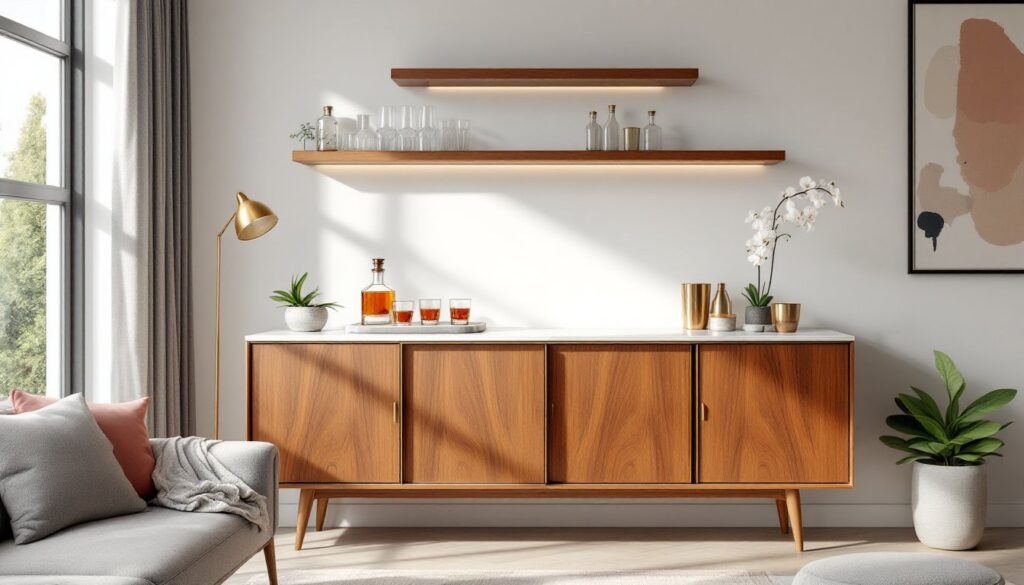
Consider floating shelves for three-dimensional interest. Install them with a level and use wall anchors rated for the load (drywall anchors for up to 50 lbs: toggle bolts for heavier). Fill shelves with a mix of books, small plants, and objects with varying heights, keep it asymmetrical to avoid the “showroom” look.
Bring Nature Indoors with Plants and Natural Elements
Living plants improve air quality and add organic texture that softens hard edges. They also signal care and permanence, a cozy room feels lived-in, not staged.
For low-light apartment living rooms, choose pothos, snake plants, or ZZ plants. All three tolerate neglect and low natural light, which is common in north-facing or interior-facing units. Fiddle leaf figs and rubber plants work in brighter spaces but need consistent watering schedules.
Vary plant heights. A large floor plant (6’+ when potted) anchors a corner and draws the eye up. Pair it with tabletop plants on shelves, side tables, or window sills. Hanging plants, string of pearls, spider plants, or trailing philodendrons, use vertical space without taking up surfaces.
Pots matter. Ceramic or terracotta pots add weight and texture: plastic liners can sit inside decorative outer pots to protect furniture from water damage. Use saucers or trays beneath pots to catch drainage, water stains on wood furniture or floors aren’t cozy, they’re a headache.
Beyond plants, bring in natural materials. Woven baskets for storage, a wooden tray on the coffee table, or a jute rug underfoot all introduce organic texture. These materials age visibly, they develop patina, not damage, which adds to the lived-in feel that defines cozy.
If natural light is limited, supplement with a full-spectrum grow light. Compact LED grow bulbs fit standard lamps and support plant health without the purple glow of older models.
Conclusion
Cozy isn’t a single purchase, it’s the accumulation of thoughtful, layered choices that prioritize comfort and livability over aesthetics alone. Renters have more control than they think. Textiles, lighting, color, and smart furniture choices all work within lease restrictions and tight budgets. The key is intentionality: every rug, lamp, and plant should justify its place by adding warmth, function, or personality. Skip the trends and focus on what makes a space feel like home, even if it’s temporary.