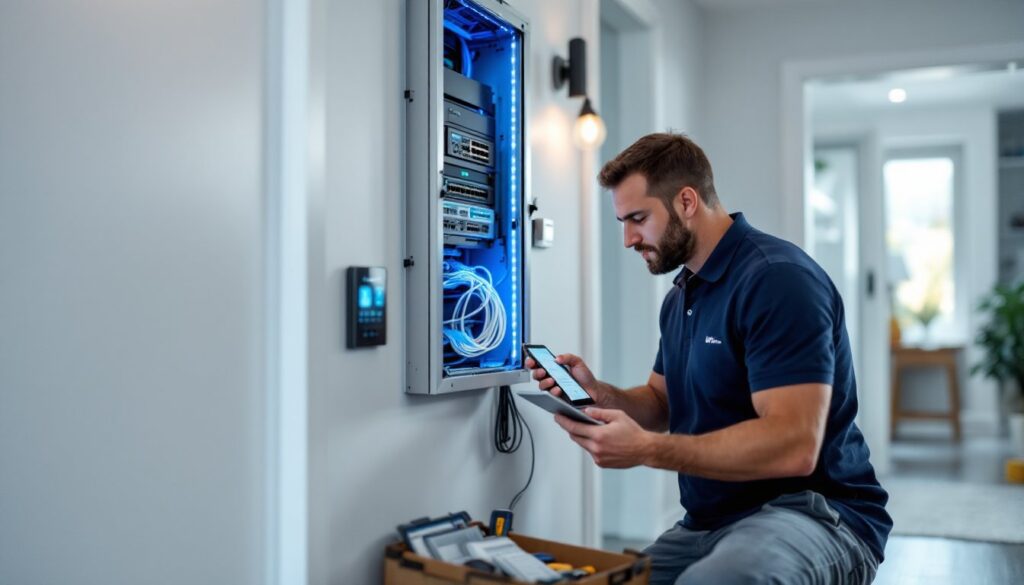

Smart home technology has evolved from luxury gadget territory into a practical upgrade for everyday homeowners. But threading a dozen wireless protocols through plaster walls, syncing sensors with a central hub, and programming routines that actually work? That’s where the weekend warrior often hits a wall. Professional home automation installers bring the expertise to turn a pile of devices into a cohesive system, without the trial-and-error headaches. For homeowners ready to upgrade security, lighting, climate control, or whole-home integration, finding the right installer means vetting credentials, understanding costs, and knowing which questions cut through the sales pitch.
Table of Contents
ToggleKey Takeaways
- Professional home automation installers handle system design, device integration, programming, and network configuration—going far beyond plugging in devices to create a cohesive, reliable smart home system.
- Finding qualified home automation installers near you requires checking CEDIA certifications, manufacturer-specific credentials, online reviews on Google and Yelp, and requesting references for similar completed projects.
- Ask installers about their platform expertise, network infrastructure approach, warranty policies, system documentation, and payment schedules before hiring to avoid hidden fees and subcontractor surprises.
- Home automation installation costs range from $800–$2,000 for basic packages to $20,000–$75,000+ for high-end custom systems, with labor rates typically $75–$250/hour depending on installer credentials and project complexity.
- A qualified home automation installer provides documented network diagrams, device lists, and programming notes—critical for future troubleshooting and upgrades—along with ongoing support or clear handoff instructions for DIY modifications.
What Do Home Automation Installers Do?
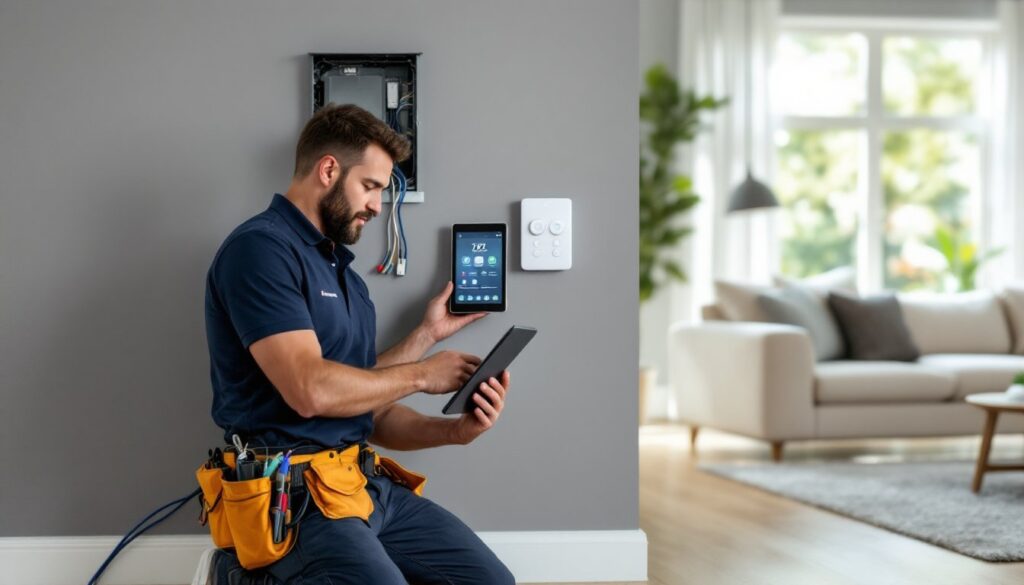
Home automation installers design, configure, and integrate smart home systems, ranging from single-room setups to whole-house networks. Their scope extends well beyond plugging in a smart thermostat.
System design and planning comes first. An installer assesses the home’s layout, existing wiring, and the homeowner’s priorities (security cameras, motorized shades, multi-zone audio, HVAC control) to create a functional plan. They identify whether the home needs hardwired backbone infrastructure or can rely on wireless mesh protocols like Zigbee, Z-Wave, or Thread.
Device installation and integration involves mounting hardware, running low-voltage wiring (often Cat6 or Cat6a for network stability), and connecting devices to a central hub or cloud platform. For retrofits in older homes, this may mean fishing cable through walls or using surface-mount raceways. The installer ensures each device, sensors, smart locks, cameras, lighting controls, communicates reliably with the rest of the system.
Programming and automation separates pros from hobbyists. Installers build routines (“good morning” scenes that raise shades, adjust temperature, and brew coffee) and conditional logic (motion-triggered lights that dim after sunset). Many use platforms like Control4, Crestron, or Home Assistant for complex scripting.
Network configuration is critical. Smart homes demand stable bandwidth and segmented networks for security. Installers often deploy dedicated access points, VLANs to isolate IoT devices from personal data, and quality-of-service (QoS) rules to prioritize camera feeds or streaming.
Troubleshooting and support round out the service. Whether it’s diagnosing interference, updating firmware, or expanding the system down the road, a qualified installer provides ongoing maintenance or documented handoff for DIY-savvy homeowners.
How to Find Qualified Home Automation Installers in Your Area
Locating a competent installer requires more than a quick search. Credentials, experience with specific platforms, and local reputation matter.
Online Directories and Review Platforms
CEDIA (Custom Electronic Design & Installation Association) maintains a directory of certified professionals. CEDIA installers complete training in system design, networking, and integration, look for the CEDIA EST (Electronic Systems Technician) or ESC-N (Networking) certifications. The directory filters by location and specialty (audio, security, lighting).
Google Business and Yelp offer reviews, but read critically. Check for patterns: Do complaints cite poor network performance, abandoned projects, or hidden fees? Strong installers often post photos of finished work, including rack layouts and clean wire management.
Houzz and Angi (formerly Angie’s List) focus on home improvement pros. Verified reviews and project portfolios help gauge style and scope. Filter for electricians or integrators with smart home specializations, some licensed electricians pivot into automation but may lack platform-specific training.
Local electrician networks sometimes subcontract automation work. If a homeowner already trusts an electrician for service panel upgrades or circuit work, asking whether they partner with automation specialists can yield reliable referrals.
Manufacturer Referrals and Certifications
Major platforms vet their installer networks. Homeowners committed to a specific ecosystem should start here.
Lutron certifies installers for Caséta, Ra2 Select, and RadioRA 3 systems. Certified pros understand load calculations for dimmer switches, three-way wiring conversions, and integrating Pico remotes with other platforms.
Control4 and Crestron require dealer certification. These closed ecosystems demand professional programming, DIY installation isn’t an option. Dealers often provide design consultations, staged rollouts, and white-glove service, though at premium pricing.
Ring, Nest, and ecobee offer certified pro networks for whole-home packages. While many devices are DIY-friendly, pros handle hardwired doorbell transformer upgrades, multi-camera PoE (Power over Ethernet) installations, and integrated alarm panels.
Savant, Josh.ai, and Elan target luxury integrations. Their installer networks often overlap with custom AV firms specializing in home theaters, distributed audio, and climate zoning.
Ask candidates which platforms they’re certified to install. A Control4 dealer may struggle with open-source platforms like Home Assistant, while a DIY-friendly installer comfortable with Zigbee/Z-Wave hubs might lack enterprise-grade networking chops.
Questions to Ask Before Hiring a Home Automation Installer
The right questions separate qualified integrators from gadget salespeople.
“What certifications do you hold, and which platforms do you recommend for my needs?” Look for CEDIA credentials, manufacturer certifications, or a low-voltage electrician’s license (required in some states for running structured wiring). If the installer pushes one brand without discussing alternatives, probe deeper.
“Can you provide references for similar projects?” A reputable installer shares contact info for past clients or posts detailed case studies. Ask references about post-install support, whether the system works as promised, and if change orders inflated the final bill.
“How do you handle network infrastructure?” Weak Wi-Fi kills smart homes. The installer should assess current router performance, recommend mesh systems or dedicated access points (Ubiquiti UniFi, Aruba Instant On, or TP-Link Omada are common), and discuss network segmentation for security.
“What’s your warranty and support policy?” Some installers offer one-year labor warranties: others sell annual service contracts. Clarify whether firmware updates, device replacements, and troubleshooting are covered or billed hourly.
“Do you subcontract any work?” Low-voltage wiring, drywall patching, and trim carpentry sometimes get subbed out. Confirm who’s accountable if the subcontractor damages finishes or misses deadlines.
“Will you provide system documentation?” A professional leaves behind network diagrams, device lists with IP addresses, and programming notes. For homeowners who want to tweak routines or add devices later, documentation is essential.
“What’s the payment schedule?” Be wary of installers demanding large upfront deposits. Standard practice: deposit to order equipment, progress payments at milestones (rough-in, device installation, programming complete), and final payment after walkthrough.
“How do you handle firmware and platform updates?” Smart home tech evolves fast. Some installers offer maintenance plans: others train homeowners to manage updates. Know which applies before signing.
Average Costs for Professional Home Automation Installation
Pricing varies by system complexity, home size, and regional labor rates. These ranges reflect 2026 market data in mid-sized U.S. markets: coastal metro areas often run 20–40% higher.
Basic smart home package (single-zone lighting control, smart thermostat, video doorbell, hub setup): $800–$2,000 including equipment and installation. Expect a half-day install, minimal wiring, and DIY-friendly gear (Lutron Caséta, Ring, ecobee). Labor typically runs $75–$125/hour for entry-level integrators.
Mid-tier whole-home integration (multi-zone lighting, 4–8 cameras with PoE, smart locks, motorized shades, central hub): $5,000–$15,000. Includes running Cat6 backbone, configuring VLANs, programming scenes, and integrating voice assistants. Labor from CEDIA-certified installers averages $100–$150/hour. Equipment often represents 50–60% of total cost.
High-end custom systems (Control4/Crestron whole-home control, distributed audio, integrated security/access control, climate zoning, outdoor lighting): $20,000–$75,000+. These projects involve detailed design, custom rack builds, concealed wiring in finished spaces, and extensive programming. Labor rates for Crestron-certified programmers can hit $150–$250/hour.
Retrofit vs. new construction affects pricing. Running wiring through existing walls costs more than open-stud installations. Budget an extra 10–30% for retrofit projects requiring drywall repair, attic/crawlspace work, or exterior camera mounting on brick/stucco.
Ongoing costs include cloud subscriptions (camera storage, remote access), annual service contracts ($200–$600/year for maintenance and updates), and occasional hardware refreshes as older devices lose platform support.
Always get itemized quotes. Compare equipment costs against retail, markup should be reasonable (15–30%) for the installer’s procurement and warranty handling. If labor seems inflated, request a breakdown by task (design, installation, programming, training).
Conclusion
Finding a qualified home automation installer means balancing platform expertise, network know-how, and transparent pricing. Start with certified directories like CEDIA or manufacturer referral networks, then vet candidates with questions about credentials, past projects, and support policies. A well-executed installation turns a collection of smart devices into a reliable system that adapts to a homeowner’s routine, without the ongoing troubleshooting that plagues rushed DIY setups. Invest time upfront in finding the right pro, and the smart home delivers years of streamlined convenience.