
Finding the right smart home installer can feel like searching for a needle in a haystack, especially when every search for “smart home installers near me” returns dozens of companies promising seamless automation. Yet the difference between a well-integrated system and a frustrating collection of gadgets often comes down to hiring the right professional. Smart home technology has matured significantly, thermostats that learn schedules, lights that respond to voice commands, security systems that send alerts to smartphones, but installation quality varies wildly. This guide walks homeowners through what professional smart home installation involves, how to vet local contractors, what to expect in terms of cost, and when DIY makes sense versus calling in an expert.
Table of Contents
ToggleKey Takeaways
- Professional smart home installation near me encompasses lighting control, climate management, security systems, audio distribution, and network infrastructure—far more than just connecting devices.
- Find qualified smart home installers by searching specialized terms, verifying CEDIA certification, checking local references, and confirming licensing and insurance before hiring.
- Smart home installation costs range from $500–$1,200 for basic setups to $15,000–$50,000+ for high-end integrated systems, with labor typically running $75–$150 per hour.
- Hire professionals for complex wiring, multi-ecosystem integration, whole-home audio, and documentation—but DIY simple plug-and-play devices if you’re comfortable with app configuration.
- Red flags include pressure to buy proprietary systems upfront, lack of written estimates, poor communication, missing credentials, and suspiciously low bids that suggest cutting corners.
What Does Smart Home Installation Include?
Professional smart home system installation typically covers several categories of devices and integration work, not just plugging in a smart speaker.
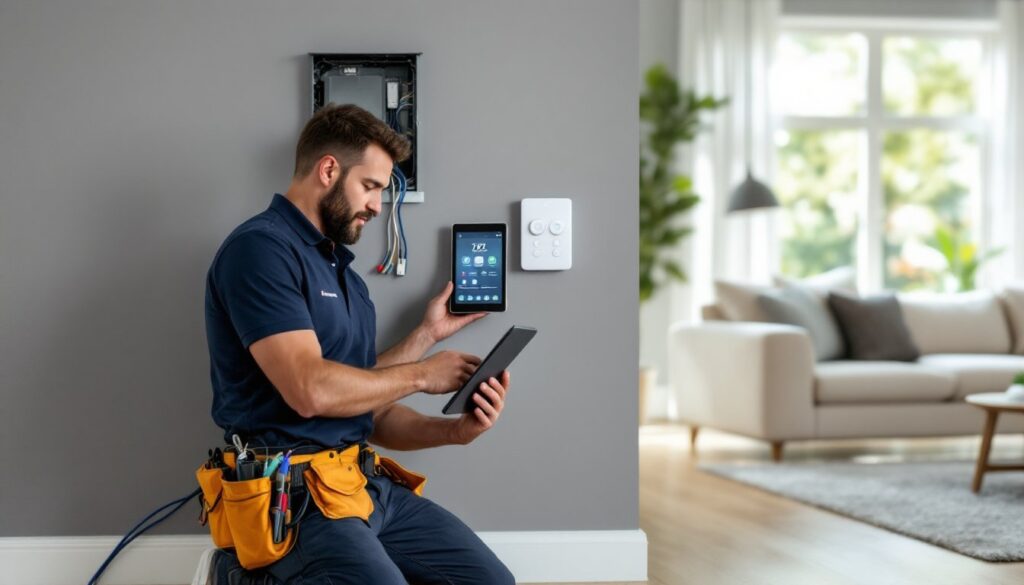
Lighting control often tops the list. Installers wire smart switches, dimmers, and sometimes in-wall relays to control existing fixtures. Some systems require a neutral wire at the switch box, older homes may need rewiring to accommodate modern smart switches.
Climate management includes smart thermostat installation, zoned HVAC controls, and integration with whole-home humidity sensors. A qualified home automation installer will ensure the thermostat is compatible with the existing HVAC system (24V common wire requirements matter here) and configure scheduling logic.
Security and surveillance encompasses doorbell cameras, motion sensors, window/door contacts, smart locks, and control panels. Many home automation companies near me also run low-voltage wiring for hardwired cameras rather than relying solely on Wi-Fi models, which improves reliability.
Entertainment and audio involves mounting TVs, installing in-wall or in-ceiling speakers, running speaker wire through walls and attics, setting up universal remotes, and configuring network streaming devices. Pre-wiring during new construction or remodels saves headaches later.
Network infrastructure is the backbone. Professional smart home installers often upgrade routers, install mesh Wi-Fi systems, or run Ethernet to key zones. A weak network undermines every device on it.
Central control hubs tie everything together, platforms like Control4, Crestron, or open-source options such as Home Assistant. Installers program scenes (“Good Morning” raises blinds, adjusts thermostat, starts coffee maker) and integrate voice assistants like Alexa or Google Home.
How to Find Qualified Smart Home Installers in Your Area
Start with specialized search terms. Generic “handyman” searches often miss installers with smart home expertise. Try “home automation installation near me,” “smart home contractors near me,” or “home automation systems near me” to surface companies that focus on this niche.
Check trade associations and certifications. CEDIA (Custom Electronic Design & Installation Association) is the main industry group. CEDIA-certified installers have completed training in system design, networking, and integration. Not every good installer holds certification, but it’s a useful filter.
Ask for local references. A smart home installation company should provide recent customer contacts in your area. Call them. Ask about communication, on-time performance, and whether the system works as promised six months later.
Read reviews with a critical eye. Look for patterns on Google, Yelp, or Angi. A handful of glowing reviews from the same month may be suspicious. Focus on detailed reviews mentioning specific challenges (“they ran into knob-and-tube wiring and solved it without upselling”).
Visit showrooms if available. Larger home automation companies sometimes maintain demo spaces where potential clients can test lighting scenes, motorized shades, and whole-home audio before committing.
Verify licensing and insurance. Most jurisdictions require a low-voltage or electrical license for running new wiring. Confirm the installer carries liability insurance and workers’ comp. If they’re running new circuits or modifying electrical panels, a licensed electrician should be on the crew.
Questions to Ask Before Hiring a Smart Home Installer
What platforms and ecosystems do you specialize in? Some installers are dealer-certified for proprietary systems (Control4, Savant, Crestron), while others focus on DIY-friendly platforms (SmartThings, Hubitat, HomeKit). Proprietary systems often offer better integration but lock the homeowner into that dealer for service and upgrades.
Do you handle both wiring and programming? A complete smart home setup service should cover physical installation (running cables, mounting devices, terminating connections) and software configuration (programming logic, creating user interfaces, integrating third-party devices).
What happens if a device stops working in a year? Clarify warranty terms, ongoing support fees, and whether the installer offers remote troubleshooting. Some companies charge annual service contracts: others bill hourly for post-installation support.
Will you provide network diagrams and documentation? Professional installers should leave behind wiring diagrams, device lists with IP addresses or zone IDs, and login credentials for hubs and apps. Future techs (or DIY tinkerers) will need this.
How do you handle walls and patching? Running wire through finished walls often requires cutting access holes. Ask whether the installer patches and paints, or if the homeowner needs to hire a separate drywaller. Some smart home automation installation crews include finish work: others don’t.
What’s your process for network assessment? A reputable home automation installer will survey the existing Wi-Fi coverage, internet speed, and router capability before proposing gear. Overloading a consumer-grade router with 40 smart devices causes headaches.
Average Cost of Professional Smart Home Installation
Pricing varies by scope, region, and system complexity, but here are typical ranges as of 2026:
- Basic smart home setup service (thermostat, doorbell camera, a few smart switches, voice assistant integration): $500–$1,200. Minimal wiring, mostly configuration and device pairing.
- Mid-range whole-home automation (lighting control in 8–12 rooms, networked thermostat, motorized shades in key rooms, security sensors, centralized hub): $3,000–$8,000. Includes running low-voltage wire, installing a control panel, and programming scenes.
- High-end integrated systems (multi-room audio, whole-home lighting with architectural fixtures, surveillance with NVR, touchscreen panels in multiple rooms, HVAC zoning): $15,000–$50,000+. Often part of a new build or major remodel. Expect detailed system design, commissioning, and training.
Labor typically runs $75–$150 per hour depending on region and installer certification. Urban markets (San Francisco, New York, Seattle) trend higher. Remote or low-voltage-only work may cost less than jobs requiring a licensed electrician.
Device costs are separate. Installers may mark up hardware 10–30% over retail. Some offer equipment at cost and charge higher labor: others bundle pricing.
Permit and inspection fees apply if new circuits or structural modifications are involved. Running speaker wire through attics generally doesn’t require permits, but adding circuits to a panel does. Local building departments set rules.
DIY vs. Professional Installation: Which Is Right for You?
Go DIY if:
- The home has neutral wires in switch boxes and straightforward wiring. Older homes without neutrals complicate smart switch installation.
- The project involves plug-and-play devices like smart plugs, battery-powered sensors, or tabletop hubs. No wall penetration or wiring knowledge required.
- The homeowner is comfortable with app configuration and troubleshooting. Pairing devices, updating firmware, and managing network settings are part of the deal.
- Budget is tight. DIY smart home kits from brands like Philips Hue, Wyze, or TP-Link cost a fraction of professional systems and work well for basic automation.
Hire a professional if:
- The project requires running wire through walls, attics, or crawlspaces. Fishing cable without damaging insulation or existing utilities takes practice and the right tools.
- Integrating multiple ecosystems (Zigbee lights, Z-Wave locks, Lutron shades, Sonos speakers) into one interface. Pros know which bridges, hubs, and protocols play nicely together.
- Whole-home audio or video distribution is part of the plan. Impedance matching, speaker placement, and amplifier sizing are nuanced.
- The homeowner values time and wants a turnkey solution. Professional installation includes setup, testing, and training, no evenings spent reading forums.
- Resale value matters. A professionally installed, documented system appeals more to buyers than a cobbled-together mix of DIY gadgets.
Many homeowners split the difference: hire a smart home installation company for infrastructure (wiring, network upgrades, in-wall devices) and handle simple tasks (pairing bulbs, configuring routines) themselves.
Red Flags to Avoid When Choosing an Installer
Pressure to buy proprietary systems immediately. Reputable smart home technology installers assess needs first, then recommend platforms. If someone pushes expensive gear before understanding the household’s habits, walk away.
No written estimate or scope of work. Professional proposals should itemize labor, materials, and timeline. Vague “we’ll figure it out as we go” pricing leads to disputes.
Unwillingness to work with existing devices. While some older gadgets won’t integrate, a skilled home automation installer finds ways to incorporate functional equipment rather than demanding a complete rip-and-replace.
Lack of licensing or insurance documentation. Ask to see proof before work begins. Unlicensed contractors can’t pull permits, and uninsured crews leave homeowners liable for injuries or damage.
Poor communication or missed appointments during the bidding phase. If an installer is unreliable before winning the job, expect worse once they have a deposit.
No ongoing support plan. Smart home systems need firmware updates, occasional reconfiguration, and troubleshooting. Installers who disappear after the final invoice create long-term headaches.
Rock-bottom pricing. If one bid is 40% lower than others, question whether the installer is cutting corners (unlicensed labor, counterfeit devices, no testing or commissioning). Quality work costs money.
Conclusion
Hiring the right smart home installer transforms a collection of gadgets into a cohesive system that genuinely improves daily life. Take time to vet credentials, ask detailed questions, and insist on clear documentation. Whether the goal is basic lighting control or a fully integrated whole-home system, a qualified professional handles the technical heavy lifting so homeowners can enjoy the convenience without the frustration. And for simpler projects, a thoughtful DIY approach saves money while still delivering meaningful automation.